Optimizing Your 2026 Investment Portfolio: Growth vs. Value
Advertisers
Optimizing your 2026 investment portfolio necessitates a thorough comparison of growth versus value stocks, leveraging 10-year projections to guide strategic asset allocation for enduring financial success.
Advertisers
As we navigate the complexities of the modern financial landscape, understanding how to approach your 2026 investment portfolio is paramount. This article delves into the perennial debate between growth and value investing, offering a comprehensive comparison with an eye toward 10-year projections to help you make informed decisions.
Understanding Growth Investing: The Pursuit of Innovation
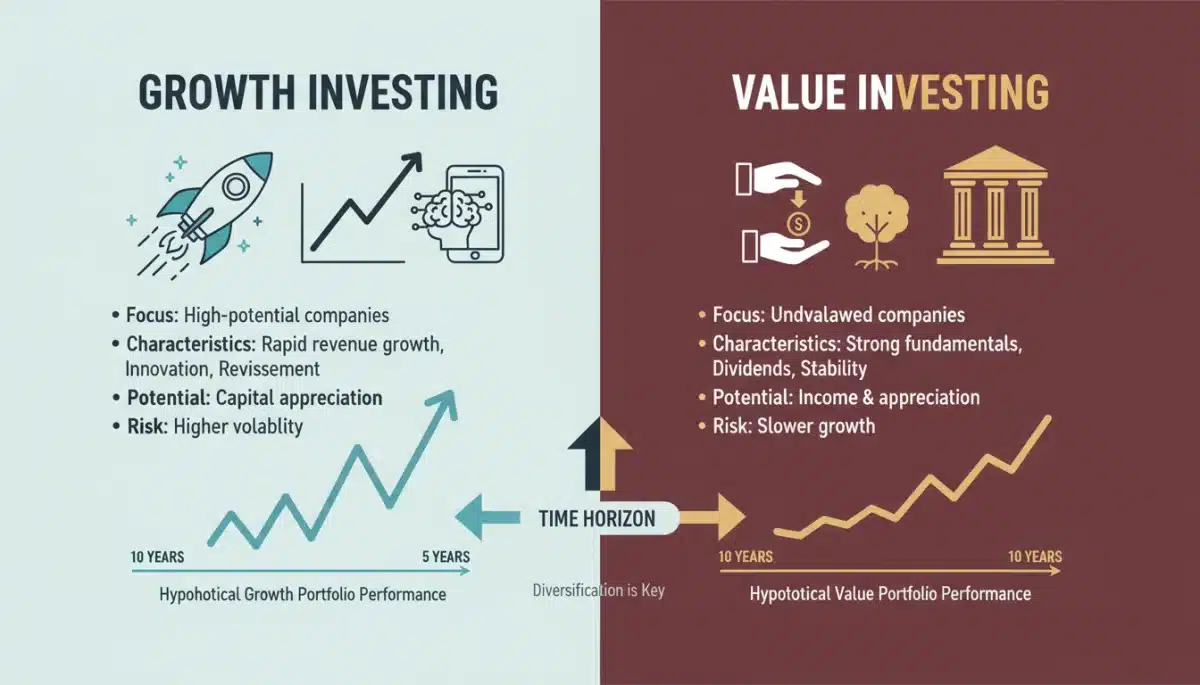
Growth investing focuses on companies that are expected to grow at an above-average rate compared to other companies in the market. These businesses typically reinvest their earnings back into the company to fuel further expansion, rather than distributing them as dividends. Investors are betting on future potential, often accepting higher risk for the promise of substantial returns.
Advertisers
In the context of 2026 and beyond, growth stocks continue to be dominated by sectors like technology, biotechnology, and renewable energy. These industries are characterized by rapid innovation, expanding markets, and often, disruptive business models. The allure is clear: identifying the next big thing early can lead to exponential gains.
Characteristics of Growth Stocks
Growth companies exhibit several distinct characteristics that attract investors seeking high returns. Recognizing these traits is crucial for effective portfolio construction.
- High Revenue and Earnings Growth: They consistently demonstrate significant increases in sales and profits.
- Strong Competitive Advantage: Often possess unique products, services, or technologies that give them an edge.
- Reinvestment in Business: Prioritize reinvesting profits into research, development, and expansion over shareholder distributions.
- Higher Price-to-Earnings (P/E) Ratios: Investors are willing to pay a premium for their future growth prospects.
10-Year Projections for Growth Stocks
Looking ahead to the next decade, growth stocks are likely to remain volatile but offer considerable upside. Factors such as continued technological advancements, global digitalization, and the increasing demand for sustainable solutions are strong tailwinds. However, regulatory scrutiny, interest rate sensitivity, and intense competition could pose challenges. Diversification within the growth segment, focusing on companies with robust fundamentals and clear paths to profitability, will be essential. The market’s appetite for innovation suggests that well-chosen growth stocks could deliver superior returns over a 10-year horizon, albeit with periods of significant drawdowns.
In conclusion, growth investing is about identifying and capitalizing on future trends. While inherently riskier, the potential rewards for patient investors who conduct thorough due diligence can be substantial, making it a compelling component of a forward-looking investment strategy.
Exploring Value Investing: The Search for Undervalued Gems
Value investing, popularized by figures like Benjamin Graham and Warren Buffett, involves buying stocks that appear to be trading for less than their intrinsic worth. These companies are often overlooked or out of favor with the market, leading to a disconnect between their share price and their underlying business value. Value investors believe that the market will eventually recognize the true worth of these companies, leading to price appreciation.
In the current economic climate, value stocks can be found across various sectors, including finance, industrials, and consumer staples. These are typically mature companies with established business models, consistent earnings, and often, a history of paying dividends. The focus is on present profitability and tangible assets, rather than speculative future growth.
Key Attributes of Value Stocks
Identifying value stocks requires a keen understanding of financial metrics and a disciplined approach to valuation. Here are some common attributes:
- Low Price-to-Earnings (P/E) Ratios: Trading at a discount compared to their historical averages or industry peers.
- Strong Balance Sheets: Companies with healthy financial positions, low debt, and ample cash flow.
- Consistent Dividends: Often return capital to shareholders through regular dividend payments.
- Established Business Models: Operate in mature industries with predictable revenue streams.
10-Year Projections for Value Stocks
Over the next 10 years, value stocks are anticipated to offer stability and potentially strong risk-adjusted returns, especially in environments where interest rates normalize or economic growth slows. As inflation concerns persist and market volatility remains elevated, the dependable earnings and dividend payouts of value companies can provide a crucial buffer. While they may not offer the explosive growth of their counterparts, their resilience and consistent performance make them attractive for long-term portfolio anchors. A potential rotation from growth to value, driven by macroeconomic shifts, could also provide a significant boost.
Ultimately, value investing is about patience and a belief in fundamental analysis. It offers a more conservative yet potentially rewarding path, aiming to minimize downside risk while capturing long-term capital appreciation as market sentiment eventually aligns with intrinsic value.
Comparing Performance: Growth vs. Value Over Time
The historical performance of growth and value stocks has often been cyclical, with periods where one outperforms the other. Understanding these cycles is critical for investors attempting to balance their portfolios for optimal returns. Over the past decade, growth stocks, particularly in the tech sector, have largely dominated, driven by innovation and low interest rates. However, this trend is not immutable, and market dynamics can shift rapidly.
The debate between growth and value is less about which is inherently superior and more about which strategy is better suited for specific market conditions. Growth stocks thrive when investor sentiment is optimistic and interest rates are low, allowing future earnings to be discounted at a lower rate. Value stocks, conversely, tend to perform well during economic recoveries, periods of rising interest rates, or when investors prioritize stability and current profitability over speculative future gains.
Historical Performance Trends
Analyzing past market cycles provides valuable insights, though it’s important to remember that past performance is not indicative of future results.
- Early 2000s: Value outperformed significantly after the dot-com bubble burst.
- Post-2008 Financial Crisis: Growth stocks experienced a prolonged period of outperformance, fueled by quantitative easing and technological advancements.
- Recent Shifts: More recently, there have been signs of a potential rotation back into value, particularly in inflationary environments.
Projected Performance for the Next Decade
For the 2026-2036 period, experts suggest a more balanced environment. While technological innovation will continue to drive growth, a higher interest rate environment and increased focus on profitability could lead to a resurgence in value. Many analysts anticipate that a blended approach, or a strategic tilt towards value, might offer a more robust portfolio. Economic normalization and the potential for persistent inflation could favor companies with strong current cash flows and solid balance sheets over those relying heavily on distant future earnings. This suggests that the pendulum could swing back, or at least stabilize, creating opportunities for both investment styles.
In summary, the choice between growth and value is not static. A dynamic understanding of market cycles and economic indicators is essential for predicting which style might lead in the coming years. A well-diversified portfolio often includes elements of both, allowing for resilience across different market conditions.
Building a Balanced Portfolio: Integrating Growth and Value
For many investors, the optimal approach isn’t to exclusively choose between growth or value, but rather to integrate both strategies into a well-diversified portfolio. A balanced portfolio aims to capture the upside potential of growth stocks while benefiting from the stability and downside protection offered by value stocks. This strategy helps mitigate risk and enhances returns across various economic cycles.
The proportion of growth versus value in a portfolio can depend on several factors, including an investor’s risk tolerance, investment horizon, and current market outlook. Younger investors with a longer time horizon might lean more towards growth for higher potential returns, while those closer to retirement might prefer a larger allocation to value for income and stability. The key is to avoid an all-or-nothing approach and instead seek a strategic blend that aligns with individual financial goals.
Strategies for Blending
There are several effective ways to blend growth and value into a cohesive investment strategy:
- Core-Satellite Approach: Maintain a core of stable value investments and use a smaller ‘satellite’ portion for higher-growth opportunities.
- Sector Diversification: Invest in growth-oriented sectors (e.g., technology) and value-oriented sectors (e.g., utilities, financials).
- Hybrid Funds/ETFs: Utilize funds that explicitly aim to combine both growth and value characteristics in their holdings.
Long-Term Benefits of Diversification
Over a 10-year period, a diversified portfolio that includes both growth and value components is often better positioned to weather market fluctuations. When one style underperforms, the other may compensate, leading to smoother returns and reduced volatility. This balanced approach helps investors stay disciplined and avoid making impulsive decisions based on short-term market trends. It’s about building a portfolio that can perform consistently, regardless of which investment style is currently in favor.
In conclusion, a balanced portfolio is a robust strategy for long-term success. By judiciously combining growth and value investments, investors can optimize their portfolios for both capital appreciation and stability, creating a resilient financial foundation for the future.
Risk Management and Market Volatility in 2026
Effective risk management is a cornerstone of any successful investment strategy, particularly when navigating the inherent volatility of growth and value stocks. The year 2026 and the subsequent decade are likely to present their own unique set of challenges and opportunities, making a proactive approach to risk more important than ever. Understanding the specific risks associated with each investment style and implementing strategies to mitigate them can safeguard your portfolio against significant losses.
Growth stocks, while offering high potential returns, typically come with higher volatility. Their valuations are often based on future expectations, which can be sensitive to changes in economic outlook, interest rates, and competitive landscapes. Value stocks, on the other hand, are generally considered less volatile due to their established earnings and lower valuations, but they are not immune to market downturns or prolonged periods of underperformance if their underlying businesses face structural decline.
Addressing Growth Stock Risks
Managing the risks associated with growth stocks requires careful consideration and strategic planning.
- Overvaluation: Avoid companies with excessively high valuations that leave little room for error.
- Concentration Risk: Diversify across different growth sectors and companies to avoid over-reliance on a few high-flyers.
- Interest Rate Sensitivity: Be aware that rising interest rates can disproportionately impact growth stocks by making future earnings less valuable.
Mitigating Value Stock Risks
Even value stocks carry risks that need to be addressed to protect your investment.
- Value Traps: Distinguish between genuinely undervalued companies and those whose low price reflects fundamental business problems.
- Slow Growth: Accept that value stocks may not offer rapid capital appreciation, requiring patience.
- Economic Downturns: While generally more resilient, value stocks can still suffer during severe economic contractions.
Ultimately, a robust risk management framework involves continuous monitoring of market conditions, periodic rebalancing of your portfolio, and a clear understanding of your personal risk tolerance. By actively managing these risks, investors can enhance the long-term resilience and performance of their diversified portfolios.
Economic Outlook and Sector Trends for 2026-2036
Forecasting the economic landscape for the next decade is a complex endeavor, but understanding potential trends can significantly influence investment decisions for your 2026 investment portfolio. Several macroeconomic factors and sector-specific developments are poised to shape the performance of both growth and value stocks. These include global geopolitical stability, technological advancements, demographic shifts, and evolving regulatory environments. A nuanced perspective on these elements is crucial for strategic asset allocation.
The global economy is expected to continue its trajectory of digitalization and automation, driving demand for innovative solutions. This trend will likely favor growth sectors such as artificial intelligence, advanced robotics, and sustainable technologies. Concurrently, demographic changes, particularly aging populations in developed nations, will put pressure on healthcare and social services, creating opportunities for both growth and value companies in these areas. Trade policies and international relations will also play a significant role, potentially creating headwinds or tailwinds for various industries.
Key Economic Drivers
Several overarching economic drivers will influence market performance over the next 10 years:
- Interest Rate Environment: The trajectory of interest rates will significantly impact valuations, especially for growth stocks.
- Inflationary Pressures: Persistent inflation could favor value stocks with pricing power and strong cash flows.
- Technological Innovation: Continued breakthroughs in AI, biotech, and clean energy will create new growth opportunities.
- Global Supply Chains: Reshaping of supply chains due to geopolitical factors could impact industrial and manufacturing sectors.
Sector-Specific Projections
Different sectors will experience varying degrees of growth and value characteristics:
- Technology: Remains a prime area for growth, though valuation discipline will be key.
- Healthcare: Benefits from demographic trends; both growth (biotech innovation) and value (established pharma) opportunities exist.
- Financials: May see a resurgence in a higher interest rate environment, favoring value.
- Energy/Utilities: Traditional value plays, but renewable energy offers significant growth potential.
In essence, the economic outlook for 2026-2036 suggests a dynamic environment where adaptability will be key. Investors who stay informed about these macro trends and sector-specific developments will be better equipped to adjust their portfolios and capitalize on emerging opportunities across both growth and value spectrums. The interplay of these forces will determine which investment style gains prominence at different points in the decade.
Long-Term Portfolio Optimization Strategies
Optimizing your investment portfolio for the long term, particularly over a 10-year horizon, goes beyond simply choosing between growth and value stocks. It involves a holistic approach that incorporates consistent rebalancing, strategic asset allocation, and a disciplined investment philosophy. The goal is to build a resilient portfolio that can not only withstand market fluctuations but also capitalize on long-term trends to achieve significant wealth accumulation.
One of the most crucial aspects of long-term optimization is regular portfolio review and rebalancing. As market conditions change and certain asset classes outperform others, your portfolio’s original allocation can drift. Rebalancing involves selling off some of the outperforming assets and buying more of the underperforming ones to bring your portfolio back to its target allocation. This strategy ensures that you are consistently buying low and selling high, while also managing risk according to your initial plan.
Key Optimization Tactics
To ensure your portfolio remains optimized for the next decade, consider these tactical approaches:
- Regular Rebalancing: Periodically adjust your asset allocation back to your target percentages to maintain risk levels and capture gains.
- Diversification Beyond Stocks: Include other asset classes like bonds, real estate, or alternative investments to further reduce risk and enhance returns.
- Tax Efficiency: Strategically place assets in tax-advantaged accounts (e.g., 401(k), IRA) and consider tax-loss harvesting to maximize after-tax returns.
- Dollar-Cost Averaging: Invest a fixed amount regularly, regardless of market highs or lows, to reduce the impact of volatility.
Adapting to Changing Market Conditions
The investment landscape is never static. Successful long-term investors are those who can adapt their strategies without abandoning their core principles. This means staying informed about economic shifts, technological advancements, and geopolitical events that could impact your investments. It does not mean chasing every hot trend, but rather making thoughtful adjustments based on a deep understanding of market fundamentals and your own financial goals. For instance, if interest rates are expected to remain high, a slight tilt towards value stocks might be prudent; conversely, if innovation accelerates, a modest increase in growth exposure could be beneficial.
In essence, long-term portfolio optimization is an ongoing process of strategic planning, disciplined execution, and informed adaptation. By adhering to these principles, investors can build a robust and enduring portfolio capable of achieving their financial aspirations over the next 10 years and beyond.
| Investment Strategy | Brief Description |
|---|---|
| Growth Stocks | Focus on companies with high-growth potential, often in innovative sectors, with higher risk but significant upside. |
| Value Stocks | Invest in undervalued companies with strong fundamentals, offering stability and potential for long-term appreciation. |
| Balanced Portfolio | Combines both growth and value to mitigate risk and maximize returns across different market cycles. |
| Long-Term Horizon | Emphasizes consistent rebalancing and strategic asset allocation for sustained wealth over 10 years. |
Frequently Asked Questions About Investment Portfolios
Growth stocks are from companies expected to grow faster than the market, often reinvesting earnings. Value stocks are from established companies trading below their intrinsic value, typically with consistent earnings and dividends.
A 10-year projection helps investors look beyond short-term market volatility and focus on long-term trends and compounding returns. It encourages strategic planning and reduces impulsive decisions based on immediate market shifts.
You can balance your portfolio by allocating a portion to each, based on your risk tolerance and goals. Consider a core-satellite approach or diversify across sectors that typically favor one style over the other. Regular rebalancing is also key.
Growth investing risks include higher volatility, potential overvaluation, and sensitivity to interest rate changes. If growth expectations are not met, these stocks can experience significant price drops, impacting portfolio performance.
While past performance doesn’t guarantee future results, some analysts predict a potential rotation towards value stocks in a higher interest rate and inflationary environment. A balanced approach remains prudent, as market cycles often shift.
Conclusion
Optimizing your 2026 investment portfolio requires a nuanced understanding of both growth and value investing, coupled with a forward-looking perspective on 10-year projections. By strategically blending these approaches, managing risks effectively, and staying attuned to evolving economic and sector trends, investors can build a resilient and high-performing portfolio. The key to long-term success lies in disciplined rebalancing, broad diversification, and an unwavering commitment to your financial objectives, ensuring your investments are well-positioned for the opportunities and challenges of the coming decade.
