Decoding 2026 Common App Essay Prompts: US College Guide

Advertisers
Understanding and effectively responding to the 2026 Common App essay prompts is crucial for US college applicants to present their unique stories and enhance their admission chances.
Advertisers
Decoding the 2026 Common App Essay Prompts: A Step-by-Step Guide for US College Applicants is an essential journey for every aspiring undergraduate. This essay is your unparalleled opportunity to showcase your authentic self, beyond grades and test scores, to admissions committees. It’s a chance to tell your story, highlight your personality, and explain what truly drives you.
Understanding the Importance of Your Common App Essay
The Common Application essay serves as a cornerstone of your college application, offering a unique window into your character, aspirations, and critical thinking abilities. Unlike other components, which often quantify your achievements, this essay provides a qualitative dimension, allowing admissions officers to connect with you on a personal level. It’s where your voice truly comes alive, differentiating you from a pool of highly qualified candidates.
Advertisers
Many applicants mistakenly view the essay as a mere formality, but it is, in fact, a powerful tool for advocacy. A well-crafted essay can illuminate aspects of your personality or experiences that might not be evident elsewhere in your application. It can demonstrate maturity, resilience, creativity, and self-awareness—qualities highly valued by universities. Investing time and thought into this component significantly strengthens your overall application.
Beyond the Transcript: What Colleges Seek
Colleges are not just looking for students with high GPAs and impressive extracurriculars; they seek individuals who will enrich their campus community. Your essay is the primary vehicle for conveying how you might contribute to that community.
- Authenticity: Are you genuinely expressing yourself, or are you trying to guess what admissions officers want to hear?
- Self-Reflection: Can you articulate insights gained from your experiences?
- Critical Thinking: Do you engage with ideas deeply and thoughtfully?
- Communication Skills: Is your writing clear, coherent, and compelling?
Ultimately, the Common App essay is about storytelling. It’s about crafting a narrative that reveals who you are, what you value, and what you hope to achieve. This narrative should resonate with your chosen prompt, but more importantly, it should resonate with you, reflecting your true essence. A strong essay can turn a borderline application into an acceptance, emphasizing its profound significance in the competitive world of college admissions.
Deconstructing the 2026 Common App Prompts: Initial Analysis
Approaching the 2026 Common App essay prompts requires a systematic deconstruction to fully grasp their nuances and potential. Each prompt is designed to elicit a specific type of reflection and storytelling, and understanding these underlying intentions is the first step toward crafting a compelling response. Avoid the temptation to immediately pick a prompt; instead, analyze each one to see which best aligns with your experiences and personal narrative.
The prompts often revolve around themes of personal growth, challenge, identity, and contribution. They are intentionally broad to allow for a wide range of interpretations and stories. Your goal is not just to answer the prompt, but to use it as a springboard for sharing something meaningful about yourself that colleges wouldn’t learn from other parts of your application.
Key Strategies for Prompt Deconstruction
Before you even begin brainstorming, take the time to break down each prompt into its core components. Look for keywords, verbs, and implied expectations.
- Identify the Core Question: What is the central inquiry each prompt is asking?
- Consider the Scope: How broad or narrow is the topic suggested by the prompt?
- Brainstorm Connections: What personal experiences, achievements, or reflections immediately come to mind for each prompt?
- Anticipate the Narrative Arc: What kind of story or reflection would naturally emerge from each prompt?
For example, a prompt asking about a challenge might not just want to hear about the challenge itself, but more importantly, about your response to it, the lessons learned, and how you grew as a result. Similarly, a prompt about identity might be less about defining who you are with labels, and more about exploring the influences and moments that shaped your self-perception. Thorough deconstruction ensures you address all facets of the prompt, preventing a superficial or incomplete response.
Choosing the Right Prompt: Aligning Your Story with the Question
Selecting the right Common App essay prompt is a critical decision that profoundly impacts the quality and authenticity of your essay. It’s not about finding the ‘easiest’ prompt, but rather the one that best allows you to tell a compelling story about yourself. The most effective essays are those where the applicant genuinely connects with the prompt, using it as a vehicle to reveal their unique perspective, experiences, and insights.
This selection process should be highly personal and introspective. Consider your life experiences, your passions, your challenges, and your moments of growth. Which prompt naturally sparks ideas and memories? Which one makes you feel like you have something significant to share? The goal is to find a prompt that not only fits your story but also excites you to write about it, as this enthusiasm will translate into your writing.
Self-Reflection and Story Inventory
Before committing to a prompt, engage in a comprehensive self-reflection exercise. Create an inventory of significant life events, accomplishments, failures, and learning experiences.
- Peak Experiences: Moments of triumph or deep satisfaction.
- Valuable Lessons: Situations where you learned something profound about yourself or the world.
- Challenges Overcome: Instances of resilience and problem-solving.
- Passions and Interests: Activities or subjects that genuinely captivate you.
Once you have this inventory, revisit each of the 2026 Common App prompts. For each prompt, see which stories from your inventory naturally fit. Don’t force a story into a prompt; instead, let the prompt guide you to a story that truly resonates. The best prompt is often the one that allows you to showcase qualities like critical thinking, leadership, empathy, or creativity in an authentic and engaging way. Remember, the essay is about revealing who you are, not just what you’ve done.
Crafting Your Narrative: Brainstorming and Outlining Your Essay
Once you’ve selected your prompt, the real work of crafting your essay begins with thorough brainstorming and outlining. This foundational stage is crucial for developing a coherent, impactful narrative that effectively addresses the prompt while showcasing your unique voice. Rushing this step often leads to disorganized essays that lack depth and clarity. Think of brainstorming as gathering all the raw materials, and outlining as constructing the blueprint for your masterpiece.
Start by letting your thoughts flow freely. Don’t censor yourself during brainstorming; embrace every idea, no matter how trivial it may seem initially. Use techniques like free writing, mind mapping, or bullet journaling to explore different angles and connections related to your chosen prompt and the stories you’ve identified. The goal is to unearth the deepest insights and most compelling anecdotes that will form the core of your essay.
Structuring Your Essay for Impact
A well-structured essay guides the reader seamlessly through your narrative, making your points clear and memorable. While there’s no single perfect structure, a typical essay includes an engaging introduction, a body that develops your story and reflections, and a powerful conclusion.
- The Hook: Start with an intriguing anecdote, a vivid description, or a thought-provoking question that immediately grabs the reader’s attention.
- Developing the Narrative: Use the body paragraphs to expand on your story, providing specific details, sensory descriptions, and emotional depth. Show, don’t just tell.
- Reflection and Insight: Crucially, don’t just recount events. Explain what you learned, how you changed, and what significance the experience holds for you. This is where your essay distinguishes itself.
- Powerful Conclusion: Reiterate your main takeaway without being redundant. Offer a forward-looking statement or a broader reflection that leaves a lasting impression.
An outline helps you organize these elements logically. It ensures that each paragraph serves a purpose and contributes to your overall message. Consider using a chronological structure for event-based stories or a thematic structure if you’re exploring an idea through various experiences. Whichever approach you choose, make sure your outline creates a clear path from your introduction to your conclusion, ensuring a cohesive and compelling narrative.
Writing Your First Draft: Embracing Imperfection and Authenticity
The first draft of your Common App essay is not about perfection; it’s about getting your ideas down on paper. Many applicants get bogged down trying to make their initial writing flawless, which can lead to writer’s block and unnecessary stress. Instead, approach your first draft with the understanding that it will be rough, unpolished, and likely full of imperfections. This mindset frees you to focus on content and storytelling, trusting that refinement will come later.
Your primary goal at this stage is to capture the essence of your story and your voice. Don’t worry about word count, grammar, or vocabulary. Just write. Let your personality shine through, and allow your natural speaking voice to emerge in your writing. Authenticity is paramount in college essays; admissions committees want to hear from the real you, not a version you think they want to see.
Key Principles for Your Initial Writing
To facilitate a productive first draft, keep these principles in mind:
- Focus on Flow: Concentrate on the narrative arc and how your ideas connect, rather than individual sentences.
- Show, Don’t Tell: Instead of stating you are resilient, describe a situation where you demonstrated resilience. Use vivid details and sensory language.
- Be Specific: Generalizations weaken an essay. Provide concrete examples and specific moments that illustrate your points.
- Embrace Your Voice: Write in a style that feels natural to you. Avoid overly formal language or jargon that doesn’t reflect who you are.
Remember, the first draft is a conversation between you and your story. It’s a chance to explore your thoughts and feelings without the pressure of external judgment. Once you have a complete draft, you’ll have a tangible piece of writing to work with, making the revision process much more manageable and effective. This initial outpouring of ideas is a vital step in transforming your thoughts into a compelling personal statement.
Revising and Refining: Polishing Your Personal Statement
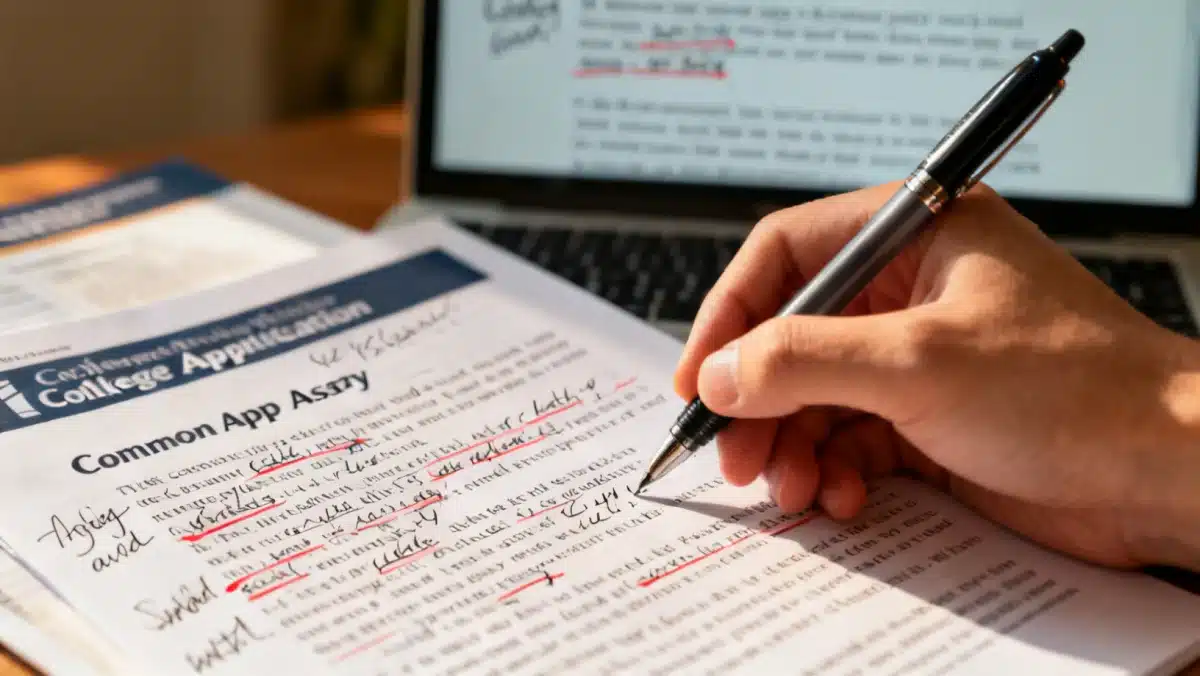
Once you have a complete first draft, the crucial process of revising and refining begins. This stage is where your essay truly takes shape, transforming raw ideas into a polished, impactful personal statement. Effective revision involves multiple passes, focusing on different aspects of your writing, from clarity and coherence to grammar and style. It’s an iterative process that requires patience, critical self-assessment, and often, external feedback.
Start by stepping away from your essay for a day or two. This fresh perspective will help you identify areas that need improvement that you might have overlooked during the initial writing phase. When you return, read your essay aloud to catch awkward phrasing, repetitive sentences, or convoluted ideas. Your aim is to ensure your message is clear, concise, and compelling, leaving no room for misinterpretation.
Strategies for Effective Revision
Break down the revision process into manageable steps to address various elements of your essay:
- Content and Coherence: Does your essay fully answer the prompt? Is your story clear and logically structured? Do all parts contribute to your main message?
- Show, Don’t Tell: Identify instances where you tell the reader something instead of showing it through action, dialogue, or vivid description. Strengthen these sections.
- Word Choice and Sentence Structure: Eliminate jargon, clichés, and redundant words. Vary your sentence structure to maintain reader engagement and improve flow.
- Grammar, Punctuation, and Spelling: Proofread meticulously for errors. Even minor mistakes can detract from the professionalism and impact of your essay. Consider using grammar-checking tools, but always review manually.
Seeking feedback from trusted readers—teachers, counselors, or even articulate friends—is invaluable. They can offer fresh perspectives, point out ambiguities, and highlight strengths you might not have recognized. While you should consider all feedback, remember that this is your story, and your voice should remain authentic. The goal of revision is to enhance your narrative, making it as persuasive and memorable as possible, without sacrificing your individuality.
Final Review and Submission: Ensuring Perfection
The final review and submission process for your Common App essay is perhaps the most critical step, as it’s your last chance to ensure everything is perfect. After countless hours of brainstorming, writing, and revising, it’s easy to overlook small errors or inconsistencies. This stage requires meticulous attention to detail and a systematic approach to catch any remaining issues before you hit the submit button. Think of it as the ultimate quality control check for your personal statement.
Begin by setting aside your essay for at least a full day, or even longer if possible. A fresh pair of eyes—even your own—is essential for spotting errors that you’ve become blind to. Read your essay backward, word by word, to disrupt your brain’s tendency to auto-correct. This technique can help you identify spelling mistakes or grammatical errors that a regular read-through might miss. Also, print out your essay; sometimes errors are more visible on paper than on a screen.
Comprehensive Checklist for Final Review
Use a comprehensive checklist to guide your final review:
- Prompt Adherence: Does your essay directly and fully answer the chosen 2026 Common App prompt?
- Word Count: Is your essay within the specified word limit (typically 650 words)? Trim or expand as necessary while maintaining quality.
- Clarity and Cohesion: Is your narrative easy to follow? Do your ideas flow logically from one paragraph to the next?
- Grammar and Punctuation: Have you checked for all grammatical errors, punctuation mistakes, and sentence fragments?
- Spelling and Typos: Proofread rigorously for any spelling errors or typos.
- Authenticity and Voice: Does the essay sound like you? Does it genuinely reflect your personality, experiences, and insights?
- Impact: Does your essay leave a lasting positive impression? Does it reveal something meaningful about you?
Before submission, ensure you’ve saved your essay in the correct format and uploaded it to the Common App platform. Double-check that the essay you’re submitting is indeed your final, polished version. Remember that once submitted, you cannot make changes. Taking these final, careful steps ensures that your hard work culminates in an essay that truly represents your best self to admissions committees.
| Key Point | Brief Description |
|---|---|
| Prompt Deconstruction | Analyze each prompt’s core question and scope to ensure a comprehensive response. |
| Story Alignment | Choose the prompt that best allows you to authentically share a meaningful personal story. |
| Authentic Voice | Let your genuine personality and experiences shine through in your writing. |
| Meticulous Revision | Proofread intensely for clarity, coherence, grammar, and adherence to word count. |
Frequently Asked Questions About the Common App Essay
The Common App essay has a strict word limit of 650 words, with a minimum of 250 words. This range encourages conciseness and thoughtful expression, pushing applicants to distill their most important messages into a powerful narrative. Adhering to these limits is crucial for a complete application.
Yes, humor can be an effective tool if used appropriately and genuinely reflects your personality. It can make your essay memorable and show a unique side of you. However, ensure the humor is tasteful, universally understandable, and doesn’t overshadow the main message or sound forced. Balance is key.
While discussing controversial topics can demonstrate critical thinking, it carries risks. If you choose to, ensure your essay focuses on your personal growth, learning, or unique perspective related to the issue, rather than simply stating an opinion. Maintain a respectful tone and avoid alienating the reader.
Absolutely. Seeking feedback from teachers, counselors, or mentors is highly encouraged. They can provide valuable insights on clarity, structure, and grammar. However, the essay must ultimately be your own work, reflecting your authentic voice and ideas. Avoid having someone else write or heavily edit it for you.
Many applicants feel this way initially. The prompts are designed to be broad enough to accommodate diverse stories. Revisit your personal experiences and try to find an unexpected angle or a deeper connection. The ‘topic of your choice’ prompt is always an option if you have a compelling story that doesn’t fit the others.
Conclusion
Navigating the 2026 Common App essay prompts can feel daunting, but by adopting a structured, step-by-step approach, US college applicants can transform this challenge into a powerful opportunity. From meticulously deconstructing each prompt to embracing multiple rounds of revision, every stage contributes to a compelling personal statement. Remember that authenticity, self-reflection, and clarity are your greatest assets. Your essay is more than just words on a page; it’s your unique story, offering admissions committees an invaluable glimpse into who you are and what you will bring to their campus community. Invest the time, seek feedback, and trust in your voice to craft an essay that truly stands out.
