New Parental Leave Benefits 2026: Employer Offerings & Qualification

Advertisers
In 2026, parental leave benefits in the United States are evolving, with many employers enhancing their offerings to support new parents through expanded paid leave, flexible work arrangements, and comprehensive family support programs.
Advertisers
As we step into 2026, the landscape of parental leave in the United States continues to transform, reflecting a growing recognition of the importance of supporting new parents. Understanding the latest developments in parental leave benefits 2026 is crucial for both employees planning to expand their families and employers striving to attract and retain top talent. This guide will navigate the recent updates, detailing what employers are offering and how you can qualify.
Advertisers
The Evolution of Parental Leave in the US
Parental leave in the United States has seen significant shifts over the past few decades, moving from a predominantly unpaid and federally mandated minimum to a more robust and employer-driven benefit. In 2026, this trend is accelerating, with more companies recognizing the strategic value of comprehensive family support.
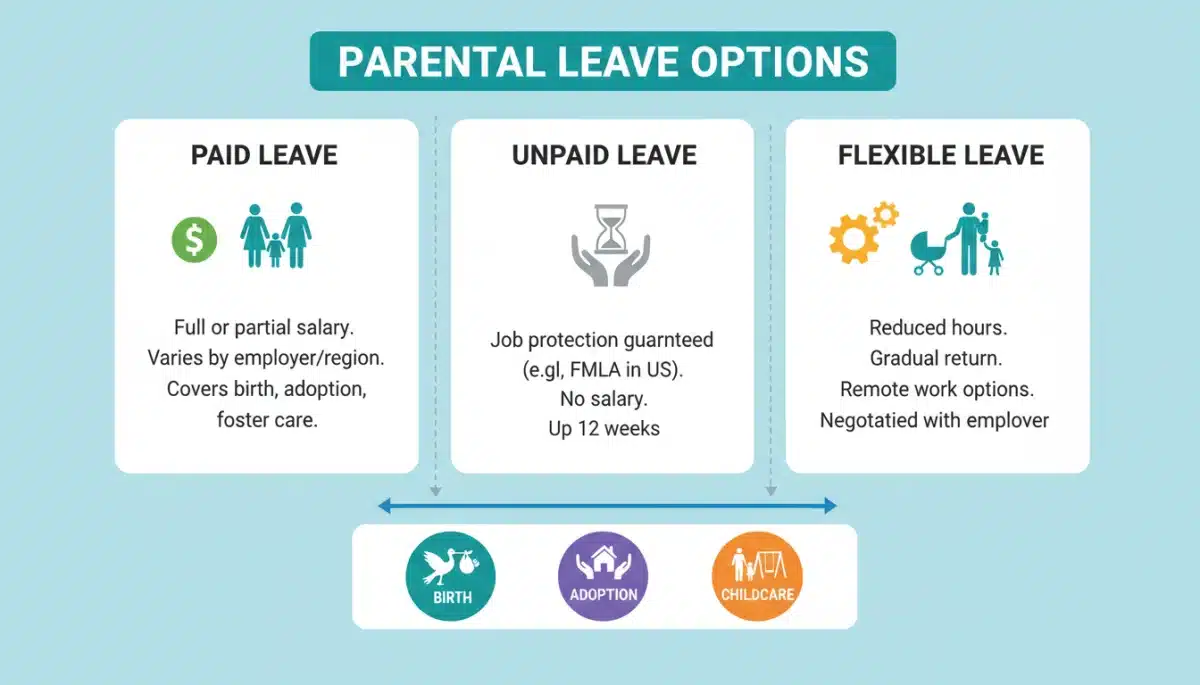
Historically, the Family and Medical Leave Act (FMLA) of 1993 provided the primary federal framework, offering up to 12 weeks of unpaid, job-protected leave for qualifying employees. While a vital baseline, it left many without the financial means to take time off. The push for paid parental leave has gained considerable momentum, driven by advocacy, state-level legislation, and a competitive talent market.
Key Drivers of Change in Parental Leave Policies
Several factors are contributing to the rapid evolution of parental leave policies. These include shifting societal expectations, a greater understanding of early childhood development, and the competitive landscape for skilled workers. Companies are increasingly viewing generous parental leave as a core component of their overall benefits package.
- Talent Attraction and Retention: Employers leverage enhanced leave policies to recruit and keep valuable employees, particularly in competitive industries.
- Employee Well-being and Productivity: Supported parents often return to work more engaged, loyal, and productive, reducing turnover costs.
- Social and Economic Research: Studies consistently show the positive impact of parental leave on child health, gender equality, and family financial stability.
- State and Local Mandates: A growing number of states and localities are implementing or expanding paid family leave programs, creating a patchwork of requirements employers must navigate.
The collective impact of these drivers means that in 2026, merely meeting FMLA requirements is often no longer sufficient for employers aiming to be competitive. Instead, many are proactively designing benefits that go above and beyond, establishing new benchmarks for family support.
Understanding Employer Offerings in 2026
In 2026, employers are showcasing a diverse array of parental leave benefits, moving beyond simple paid time off to encompass a more holistic approach to family support. These offerings are designed to cater to various family structures and needs, reflecting a more inclusive workplace culture.
While the specifics vary widely by company size, industry, and location, several key trends are emerging. Many companies are increasing the duration of paid leave, often offering more than the standard 12 weeks, and expanding who qualifies for this leave. The focus is not just on the birth parent but also on partners, adoptive parents, and those welcoming children through surrogacy.
Enhanced Paid Leave Durations
One of the most significant updates for 2026 is the extension of paid leave periods. Where 6-8 weeks was once considered generous, many leading employers are now offering 12, 16, or even 20+ weeks of fully paid leave. This allows parents more time to bond with their new child without financial strain.
- Primary Caregiver Leave: Often 12-20 weeks, fully paid, for the parent taking on the primary care role.
- Secondary Caregiver/Paternal Leave: Typically 4-12 weeks, fully paid, recognizing the crucial role of all parents.
- Gender-Neutral Policies: A growing number of companies are adopting gender-neutral language and policies, ensuring all parents receive equitable benefits regardless of gender or role.
Beyond traditional paid leave, some innovative employers are integrating a phased return-to-work option, allowing parents to gradually increase their hours while maintaining a portion of their leave benefits. This flexibility acknowledges the challenges of transitioning back to full-time work after welcoming a new family member, making the process smoother and less stressful.
Qualification Criteria for Parental Leave in 2026
Understanding the eligibility requirements for parental leave benefits 2026 is paramount for employees planning their family expansion. While federal laws like the FMLA provide a baseline, employer-specific policies often have additional criteria that can significantly impact access to more generous benefits.
Generally, eligibility hinges on a combination of factors, including length of employment, employment status (full-time vs. part-time), and the type of parental event. It’s crucial for employees to review their company’s specific policies, as these can offer more comprehensive support than mandated by law.
General Eligibility Requirements
Most parental leave policies, both federal and employer-specific, require employees to meet certain conditions before they can take leave. These are designed to ensure the benefit is utilized by established members of the workforce.
- Length of Service: Typically, employees must have worked for their employer for a minimum period, often 12 months, to qualify for FMLA and many company-specific paid leave programs.
- Hours Worked: FMLA requires 1,250 hours worked within the 12 months preceding the leave. Employer policies may have similar or different hour requirements.
- Company Size: FMLA applies to employers with 50 or more employees within a 75-mile radius. Smaller companies may not be federally obligated but might offer leave as a competitive benefit.
- Type of Parental Event: Leave is typically available for the birth of a child, adoption, or foster care placement. Some policies also extend to surrogacy.
It’s important to note that state and local paid family leave laws often have their own set of eligibility criteria, which may be more lenient than federal or employer policies. Employees should investigate all applicable laws in their jurisdiction to understand their full range of options.
Navigating State and Local Paid Family Leave Laws
Beyond federal mandates and employer-specific programs, a growing number of states and localities have implemented their own paid family leave (PFL) laws. These laws significantly expand access to paid time off for new parents, creating a complex but beneficial landscape for employees across the US in 2026.
These state and local programs are often funded through employee payroll deductions and sometimes employer contributions, providing a safety net for workers who may not have access to paid leave through their employers or who need to supplement existing benefits. Understanding these laws is vital as they can run concurrently with, or in addition to, FMLA and company policies.
Key Features of State and Local PFL Programs
While each state’s program has unique characteristics, several common features define these paid family leave initiatives. These often include specific durations, wage replacement rates, and application processes.
- Duration of Leave: State PFL programs typically offer between 8 and 12 weeks of paid leave, though some may provide more or less.
- Wage Replacement: Most programs offer partial wage replacement, often ranging from 50% to 90% of an employee’s average weekly wage, up to a maximum cap.
- Broad Eligibility: State PFL laws often have broader eligibility criteria than FMLA, applying to more workers and smaller employers. Many also cover self-employed individuals.
- Reasons for Leave: While parental bonding is a primary reason, these programs often extend to caring for a seriously ill family member or managing a personal serious health condition.
For employees in affected states, these programs can be a game-changer, ensuring financial stability during a critical family transition. Employers operating in multiple states must meticulously track and comply with varying PFL requirements, often integrating them into their overall benefits strategy to avoid compliance issues and maximize employee support.
The Rise of Comprehensive Family Support Programs
In 2026, the discussion around parental leave has broadened significantly beyond just time off and pay. Forward-thinking employers are now integrating comprehensive family support programs, recognizing that the journey of parenthood extends far beyond the initial leave period. This holistic approach aims to provide sustained support for employees and their families.
These programs often include a suite of benefits designed to alleviate the challenges new parents face, from childcare concerns to mental health support. The goal is to create an environment where employees feel supported in both their professional and personal lives, fostering greater loyalty and well-being.
Beyond Leave: A Holistic Approach to Parenthood
Modern family support programs are multifaceted, addressing various aspects of a parent’s life. These offerings demonstrate a deeper commitment from employers to their employees’ long-term success and family stability.
- Childcare Assistance: This can range from on-site childcare facilities, subsidies for external childcare, or partnerships with childcare providers offering discounted rates.
- Lactation Support: Dedicated lactation rooms, access to breast milk shipping services for traveling parents, and resources for pumping and feeding.
- Mental Health Resources: Access to counseling services, employee assistance programs (EAPs) with family-specific support, and workshops on managing parental stress.
- Return-to-Work Programs: Phased return options, mentorship programs for new parents, and flexible work arrangements like telecommuting or compressed workweeks.
- Family Planning Benefits: Coverage for fertility treatments, adoption assistance, and surrogacy support, acknowledging diverse paths to parenthood.
These expanded benefits not only help employees navigate the complexities of parenthood but also send a strong message about an organization’s values. Employers who invest in these programs often see a positive impact on company culture, employee morale, and ultimately, their bottom line.
Advocating for Your Parental Leave Rights
Understanding the landscape of parental leave benefits 2026 is one thing, but effectively advocating for your rights and maximizing your benefits requires proactive engagement. Employees should not assume their employer’s policy is the only option; rather, they should be informed and prepared to ask questions.
The process of planning for parental leave can seem daunting, but with proper preparation and communication, it can be a smooth transition. Knowing your rights under federal, state, and local laws, as well as your company’s internal policies, is the first step.
Steps to Secure Your Parental Leave Benefits
Taking initiative and communicating effectively with your employer can significantly streamline your parental leave experience. Here are some practical steps to consider:
- Review Company Policy: Start by thoroughly reading your employee handbook or consulting with HR to understand your company’s specific parental leave policy. Pay attention to eligibility, duration, pay, and notice requirements.
- Understand Federal and State Laws: Familiarize yourself with FMLA and any applicable state or local paid family leave laws. This knowledge empowers you to understand your minimum entitlements.
- Plan Ahead: Notify your employer as soon as reasonably possible about your upcoming leave. Most policies require advance notice (e.g., 30 days) to allow for proper planning and coverage.
- Document Everything: Keep records of all communications regarding your leave, including emails, policy documents, and confirmed dates.
- Ask Clarifying Questions: Don’t hesitate to ask HR about any ambiguities in the policy, such as how benefits coordinate with state programs, or options for flexible return-to-work.
By proactively engaging in this process, employees can ensure they are fully utilizing the parental leave benefits available to them, allowing for a more focused and stress-free period of bonding with their new child.
The Future Outlook for Parental Leave
Looking ahead from 2026, the trajectory for parental leave benefits in the United States points towards continued expansion and refinement. The momentum generated by state-level legislation, increased corporate adoption, and a growing societal appreciation for work-life balance suggests that parental leave will remain a key area of focus for both policymakers and employers.
While the US still lags behind many other developed nations in terms of national paid parental leave mandates, the ongoing shifts indicate a move towards more comprehensive and inclusive support systems. The competitive talent market will likely continue to drive employers to innovate and enhance their offerings.
Anticipated Trends and Developments
- Federal Paid Leave Legislation: While progress has been slow, the conversation around a national paid family leave program continues to gain traction, potentially unifying the current patchwork of state laws.
- Increased Inclusivity: Policies will likely become even more inclusive, covering a wider array of family structures, including LGBTQ+ parents and those building families through non-traditional means.
- Expanded Definitions of "Parental Event": Some employers may begin to offer leave for less conventional family events, such as caring for an older child during a significant life transition or supporting foster families beyond initial placement.
- Focus on Mental Health Integration: Parental leave policies will increasingly integrate mental health support, recognizing the psychological challenges that can accompany new parenthood.
- Technology-Driven Support: Expect more sophisticated platforms and apps to help employees navigate benefits, access resources, and manage their leave periods efficiently.
The evolving landscape of parental leave signifies a positive move towards a more family-friendly work culture in the United States. As employers and policymakers continue to adapt, the benefits for new parents are set to become more generous, inclusive, and supportive, fostering healthier families and more engaged workforces.
| Key Aspect | Brief Description |
|---|---|
| Increased Paid Leave | Many employers now offer 12-20+ weeks of fully paid leave, exceeding federal minimums. |
| Expanded Eligibility | Benefits increasingly cover partners, adoptive parents, and surrogacy, with gender-neutral policies. |
| State & Local PFL | Growing number of states offer paid family leave, providing partial wage replacement. |
| Holistic Support | Beyond leave, benefits include childcare, mental health, and phased return-to-work programs. |
Frequently Asked Questions About Parental Leave in 2026
The Family and Medical Leave Act (FMLA) is a federal law providing eligible employees up to 12 weeks of unpaid, job-protected leave for family and medical reasons, including the birth or adoption of a child. It serves as a baseline, with many employers and states offering more generous paid leave options in 2026.
Increasingly, yes. Many employers are adopting gender-neutral parental leave policies to ensure all parents, regardless of gender or their role as primary or secondary caregiver, receive equitable benefits. This reflects a growing understanding of diverse family structures and parental responsibilities.
Qualification for state-level paid family leave (PFL) programs typically depends on your state of residence, earnings history, and employment status. Most programs are funded through payroll deductions and have specific eligibility criteria regarding length of employment and reason for leave. You should check your state’s specific PFL website for details.
Beyond paid leave, many employers in 2026 offer comprehensive family support programs. These can include childcare assistance, lactation support, mental health resources for new parents, flexible return-to-work options, and benefits for fertility treatments or adoption, aiming for holistic family well-being.
Often, yes. Federal FMLA leave can run concurrently with state paid family leave or employer-provided leave. However, the exact coordination varies. It’s crucial to consult with your employer’s HR department and review state-specific guidelines to understand how these different benefits can be combined or sequenced for maximum advantage.
Conclusion
The landscape of parental leave in 2026 is dynamic and increasingly supportive, reflecting a significant evolution in how American employers and states approach family support. From expanded paid leave durations and gender-neutral policies to comprehensive family support programs, the trend is clear: investing in new parents is a priority. Understanding these evolving benefits and proactively engaging with your employer and relevant state resources will empower you to navigate this crucial life transition with greater confidence and financial security, fostering both personal well-being and a more inclusive workforce.
