CARES Act Sunset: 2026 Tax Implications for US Small Businesses
Advertisers
The CARES Act sunset in 2026 will significantly alter the tax landscape for U.S. small businesses, necessitating proactive planning to navigate evolving regulations and optimize financial strategies.
As the calendar pages turn towards 2026, many small business owners in the U.S. are beginning to consider the profound impact of the CARES Act sunset: understanding the 2026 tax implications for small businesses in the U.S. This looming deadline signals the expiration of crucial pandemic-era relief provisions, demanding a strategic re-evaluation of financial planning.
The Genesis and Evolution of the CARES Act
The Coronavirus Aid, Relief, and Economic Security (CARES) Act, enacted in March 2020, represented an unprecedented legislative response to the economic fallout of the COVID-19 pandemic. Its primary goal was to provide immediate financial relief to individuals, families, and businesses grappling with widespread closures and economic uncertainty. For small businesses, the Act introduced a suite of programs designed to maintain payrolls, cover operational costs, and ensure liquidity during a period of profound disruption.
Initially, the CARES Act was a lifeline, offering a sense of stability when the future was most uncertain. Its provisions were broad, touching various aspects of the economy, but its impact on small businesses was particularly transformative. The Act's rapid implementation, while critical, also led to complexities and subsequent adjustments as policymakers refined its mechanisms to better serve the intended beneficiaries.
Anúncios
Key Pillars of Small Business Relief
The CARES Act established several cornerstone programs aimed squarely at supporting small businesses. These initiatives were designed to address immediate cash flow problems and prevent mass layoffs, thereby cushioning the economic blow of the pandemic.
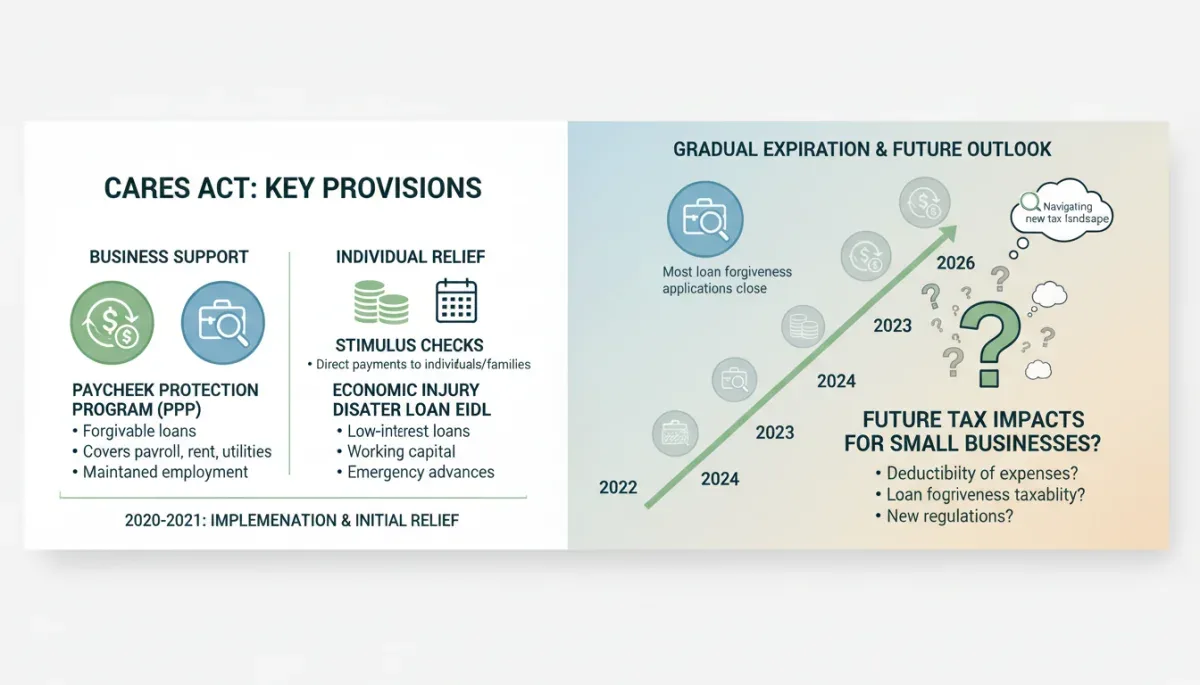
- Paycheck Protection Program (PPP): This program offered forgivable loans to help businesses keep their workforce employed during the crisis. The loans could be forgiven if specific criteria, primarily related to payroll maintenance, were met.
- Economic Injury Disaster Loan (EIDL) Program: EIDL provided low-interest loans to help businesses meet financial obligations and operating expenses that could not be met due to the pandemic. It also included an EIDL Advance, which functioned as a grant.
- Employee Retention Credit (ERC): A refundable tax credit against certain employment taxes for eligible employers who kept employees on their payroll during the pandemic.
- Deferral of Employer Social Security Taxes: Allowed employers to defer payment of their share of Social Security taxes, providing immediate cash flow relief.
These programs were not just financial instruments; they were a testament to the government's commitment to preserving the backbone of the American economy. However, as with all temporary measures, their expiration date was always on the horizon, leading to the current focus on the 2026 sunset. Understanding how these programs functioned and their initial tax treatments is crucial for comprehending the upcoming changes.
The initial years of the CARES Act saw businesses navigating complex application processes and evolving guidance. Many small businesses successfully leveraged these resources to survive and, in some cases, even adapt and thrive. The experience gained during this period will be invaluable as they prepare for a post-CARES Act landscape. The journey from crisis response to recovery and now to a new normal is a continuous learning curve for entrepreneurs.
Unpacking the 2026 Sunset Provisions
The term 'sunset' in legislative language refers to the expiration of a law or a provision of a law after a specified date. For the CARES Act, 2026 marks a significant turning point, as several key provisions that benefited small businesses are set to expire or have already begun to phase out. This impending sunset means that the tax landscape that small businesses have grown accustomed to over the past few years will undergo considerable changes, requiring careful attention and strategic adjustments.
Anúncios
While some provisions, like the PPP, have already largely concluded their initial phases, the tax implications of their winding down, and the expiration of other continuing benefits, will become fully apparent by 2026. This period demands a thorough review of past financial decisions and future projections to mitigate potential adverse effects.
Key Provisions Facing Expiration or Change
Several critical components of the CARES Act, which have provided substantial tax relief and financial support, are on the chopping block. Understanding which provisions are expiring and how they will affect your business is the first step in preparing for the future.
- Employee Retention Credit (ERC): While the ERC was primarily available for 2020 and 2021, the ability to claim the credit and make amendments extends beyond these years. However, the period for amending returns to claim the ERC is subject to statutes of limitations, which will become increasingly relevant as 2026 approaches. Businesses need to ensure all claims are finalized and accurate.
- Deferral of Employer Social Security Taxes: This provision allowed businesses to defer payment of certain payroll taxes. While the deferral period has ended, the repayment schedule for these deferred taxes extends into 2021 and 2022. Businesses that utilized this deferral must ensure their repayment obligations are met to avoid penalties.
- Temporary Full Expensing for Business Meals: For 2021 and 2022, businesses could deduct 100% of the cost of business meals. This temporary measure is set to revert to the standard 50% deduction, impacting entertainment and meal expense planning.
- Business Interest Expense Limitation (Section 163(j)): The CARES Act temporarily relaxed the limitation on the deductibility of business interest expense by increasing the adjusted taxable income (ATI) limitation from 30% to 50% for tax years 2019 and 2020 (and 2021 for partnerships). This favorable treatment has already reverted, but businesses must be aware of the ongoing, stricter limitations.
The expiration of these provisions means that businesses will lose certain tax advantages they may have factored into their financial models. This necessitates a proactive approach to tax planning and a re-evaluation of how these changes will impact profitability and cash flow. The shift back to pre-pandemic tax rules, coupled with other economic factors, creates a complex environment for small businesses.
Impact on Small Business Deductions and Credits
The sunset of the CARES Act in 2026 will undoubtedly reshape the landscape of available tax deductions and credits for small businesses. Many of the temporary enhancements and new provisions introduced during the pandemic were designed to offer immediate relief, and their expiration means a return to pre-CARES Act tax treatments. This shift requires businesses to re-evaluate their operational expenses and investment strategies, as what was once fully deductible or creditable may no longer be.
Understanding these changes is paramount for effective tax planning. Businesses that fail to adjust their strategies could face unexpected tax liabilities, impacting their bottom line and overall financial health. The nuances of these expiring provisions can be complex, and their combined effect could be substantial.
Specific Deductions and Credits Affected
The tax code is intricate, and the CARES Act temporarily modified several key areas. As these modifications expire, businesses will need to be aware of the reversion to prior rules.
- Business Meals Deduction: As mentioned, the temporary 100% deduction for business meals provided by a restaurant will revert to 50%. This change impacts how businesses account for client entertainment and employee meal benefits, requiring careful tracking and budgeting.
- Net Operating Loss (NOL) Rules: The CARES Act temporarily allowed businesses to carry back Net Operating Losses (NOLs) arising in 2018, 2019, and 2020 for up to five years. It also temporarily suspended the 80% taxable income limitation for NOLs. These provisions have already largely expired, meaning future NOLs will be subject to the 80% limitation and generally cannot be carried back, only forward. This significantly alters strategies for managing losses.
- Research & Development (R&D) Tax Credit Considerations: While not a direct CARES Act provision, the tax treatment of R&D expenses has also seen changes. Starting in 2022, businesses are generally required to amortize R&D expenses over five years (or 15 years for foreign R&D), rather than deducting them immediately. While this change predates the specific 2026 sunset, it adds to the cumulative impact of expiring tax benefits and requires businesses to factor in higher taxable income in the short term.
The cumulative effect of these changes could lead to a higher effective tax rate for some businesses. It underscores the importance of reviewing current accounting practices and making necessary adjustments. Businesses should actively engage with their tax advisors to understand the specific implications for their unique financial situation and explore alternative tax-saving strategies.
Strategic Tax Planning for 2026 and Beyond
As the CARES Act sunset approaches in 2026, proactive and strategic tax planning becomes not just beneficial, but essential for the survival and prosperity of small businesses in the U.S. This period of transition demands a forward-looking approach, moving beyond reactive adjustments to comprehensive financial foresight. Businesses must consider the broader economic context, potential legislative changes, and their own evolving operational models when crafting their post-CARES Act tax strategy.
Effective planning involves more than just understanding the expiring provisions; it requires a deep dive into a business's specific financial situation, its industry, and its growth trajectory. The goal is to minimize tax liabilities while maximizing available opportunities, ensuring long-term sustainability.
Key Strategies for Small Businesses
Navigating the post-CARES Act tax landscape requires a multi-faceted approach. Here are some critical strategies small businesses should consider implementing:
- Regular Financial Reviews and Projections: Conduct frequent financial assessments to understand current cash flow, profitability, and future projections. This will help identify potential tax shortfalls or surpluses well in advance.
- Budgeting for Increased Tax Liabilities: With the expiration of certain deductions and credits, businesses may face higher taxable income. Adjust budgets to account for potentially increased tax payments and ensure adequate reserves are set aside.
- Exploring Alternative Tax Incentives: Research and identify other federal, state, and local tax incentives that may be available. This could include credits for hiring certain individuals, investing in specific technologies, or operating in designated zones.
- Optimizing Depreciation Strategies: Review depreciation schedules for assets. While 100% bonus depreciation for qualified property began phasing out in 2023, maximizing depreciation deductions for eligible assets remains a critical tax planning tool.
- Consider Entity Structure: Re-evaluate your business entity structure (e.g., sole proprietorship, partnership, S-corp, C-corp) to ensure it remains the most tax-efficient option given the changing tax laws.
Engaging with a qualified tax advisor or accountant is paramount during this period. These professionals can provide tailored advice, identify specific opportunities, and help businesses remain compliant with evolving tax regulations. Their expertise can transform potential challenges into strategic advantages, ensuring that businesses are not caught off guard by the changes.
Furthermore, businesses should maintain meticulous records. Accurate and organized financial documentation is crucial for claiming deductions, defending against audits, and providing clear data for strategic decision-making. The transition period leading up to 2026 is an opportune moment to refine record-keeping practices and leverage technology for financial management.

The Role of PPP and EIDL in the Post-2026 Environment
The Paycheck Protection Program (PPP) and Economic Injury Disaster Loan (EIDL) were two of the most significant pillars of the CARES Act, providing crucial liquidity and support to millions of small businesses. While the application periods for these programs have largely closed, their lingering effects and tax treatments continue to be relevant, especially as we approach the 2026 sunset. Understanding how these loans and grants were treated for tax purposes, and any residual obligations, is vital for proper financial closure.
For many businesses, the forgiveness of PPP loans significantly impacted their financial statements and tax returns. Similarly, EIDL advances were treated as tax-exempt income, and the interest on EIDL loans was deductible. As these programs fully wind down, businesses must ensure all related tax implications have been correctly addressed and that no unforeseen liabilities arise.
Navigating Forgiveness and Repayment
The forgiveness aspect of PPP loans was a game-changer for many small businesses, effectively turning a loan into a grant. However, the process was often complex, with specific requirements for employee retention and spending on eligible expenses.
- PPP Loan Forgiveness: Forgiven PPP loans are generally excluded from gross income for federal tax purposes. Furthermore, expenses paid with forgiven PPP funds are deductible. This favorable tax treatment was a key benefit. Businesses should ensure they have all documentation related to their PPP loan forgiveness, as this will be critical for any future audits or inquiries.
- EIDL Advances and Loans: EIDL advances were non-taxable and did not need to be repaid. EIDL loans, however, are traditional loans that must be repaid. Businesses that received EIDL loans need to be aware of their repayment schedules and ensure they are making timely payments to avoid penalties and preserve their credit standing. The interest paid on these loans is generally deductible as a business expense.
The interaction between these programs and other tax provisions has been a source of confusion for some businesses. For instance, the original intent was that no double-dipping would occur between the ERC and PPP. Subsequent legislation clarified that businesses could claim both, provided the same wages were not used for both benefits. As the dust settles, ensuring all these interdependencies have been correctly accounted for on past tax returns is crucial. Any discrepancies could lead to future tax adjustments or audits.
The long-term impact of these programs also extends to a business's balance sheet. While PPP forgiveness boosted equity, EIDL loans represent long-term liabilities. Businesses should continue to monitor these aspects and incorporate them into their overall financial planning. The winding down of these programs signifies a return to a more traditional lending and tax environment, where businesses must rely on their own profitability and access to conventional financing.
Anticipating Future Legislative Changes and Economic Trends
While the CARES Act sunset in 2026 provides a clear legislative deadline, the broader economic and political landscape is constantly shifting. Small businesses must not only prepare for the known expiration of provisions but also anticipate potential future legislative changes and emerging economic trends that could further impact their operations and tax obligations. A forward-thinking approach involves staying informed about policy discussions and economic forecasts.
The U.S. economy is dynamic, influenced by global events, technological advancements, and evolving consumer behaviors. These factors can create new opportunities but also present new challenges, many of which can have tax implications. Businesses that are agile and responsive to these broader trends will be better positioned for long-term success.
Monitoring Policy Discussions and Economic Indicators
Staying abreast of legislative developments is crucial. Tax laws are not static, and new proposals can emerge that either mitigate or exacerbate the effects of the CARES Act sunset.
- Potential for New Tax Legislation: Lawmakers may introduce new tax reforms or incentives in response to economic conditions or policy objectives. These could include changes to corporate tax rates, new credits for specific industries, or adjustments to deductions for capital investments.
- Inflation and Interest Rates: Ongoing inflation and interest rates directly affect a business's purchasing power, cost of capital, and overall profitability. High inflation can erode the value of deductions, while rising interest rates increase the cost of borrowing.
- Labor Market Dynamics: Shifts in the labor market, such as wage growth, labor shortages, or changes in employment benefits, can impact payroll costs and influence a business's eligibility for certain employment-related tax credits.
- Technological Advancements: The rapid pace of technological change can lead to new business models and industries. Policymakers may introduce tax incentives or regulations related to areas like artificial intelligence, renewable energy, or cybersecurity.
Businesses should regularly consult reputable economic forecasts and subscribe to financial news sources to stay informed. Participating in industry associations and engaging with local chambers of commerce can also provide valuable insights into regional and sector-specific trends. Understanding these broader forces allows businesses to make more informed strategic decisions, from investment choices to workforce planning.
Furthermore, the global economic environment plays an increasingly significant role. International trade policies, supply chain disruptions, and geopolitical events can all have ripple effects on U.S. small businesses. A comprehensive view that incorporates both domestic and international factors will be key to resilient tax and business planning in the years following the CARES Act sunset.
Best Practices for Small Business Compliance and Record-Keeping
In the wake of the CARES Act sunset in 2026, and with the ever-present complexity of the U.S. tax code, meticulous compliance and robust record-keeping are more critical than ever for small businesses. The temporary nature of many CARES Act provisions means that businesses must be prepared to demonstrate adherence to specific rules for the periods in which those rules were active, even years later. Furthermore, a return to pre-pandemic tax norms necessitates a renewed focus on foundational best practices to avoid penalties and ensure financial integrity.
Good record-keeping is not merely about fulfilling legal obligations; it's a strategic asset. It provides the data necessary for informed decision-making, supports accurate financial reporting, and streamlines the process of tax preparation and potential audits. For small businesses, where resources are often limited, efficiency in these areas can yield significant benefits.
Essential Record-Keeping and Compliance Tips
Establishing and maintaining rigorous financial practices will be a cornerstone of success in the post-CARES Act era. Here are some best practices to adopt:
- Digital Record Management: Transition to or enhance digital record-keeping systems. Cloud-based accounting software and document management platforms can centralize financial data, improve accessibility, and provide secure backups, reducing the risk of lost or damaged records.
- Categorize Expenses Diligently: Ensure all business expenses are correctly categorized and documented. This is particularly important as certain deductions, like business meals, revert to lower percentages. Clear categorization simplifies tax preparation and supports claims during an audit.
- Retain Records for the Full Statutory Period: Understand and adhere to the IRS's record retention requirements, which typically range from three to seven years, depending on the type of record and transaction. For CARES Act-related programs, it's prudent to retain all documentation well beyond the typical period, especially for PPP forgiveness and ERC claims.
- Reconcile Accounts Regularly: Perform monthly bank and credit card reconciliations to catch discrepancies early and ensure the accuracy of financial statements. This practice helps prevent errors that could lead to tax complications.
- Stay Updated on Tax Law Changes: Tax laws are dynamic. Regularly consult official IRS publications, subscribe to reputable tax news sources, and maintain open communication with your tax advisor to stay informed about any new legislation or regulatory guidance that could affect your business.
The investment in robust compliance and record-keeping systems pays dividends by reducing stress, saving time, and preventing costly errors. For small businesses, this foundational work frees up valuable resources to focus on growth and innovation, rather than being bogged down by administrative burdens. In a post-CARES Act world, a strong compliance framework will be a competitive advantage.
Preparing for a Post-CARES Act Business Environment
The impending CARES Act sunset in 2026 marks more than just the expiration of specific tax provisions; it signals a return to a more traditional business and tax environment, free from the immediate crisis-response measures of the pandemic. For small businesses in the U.S., this means recalibrating expectations, re-evaluating operational efficiencies, and reinforcing financial resilience. The lessons learned during the pandemic, particularly regarding adaptability and resourcefulness, will be invaluable in navigating this new phase.
The period leading up to and beyond 2026 is an opportunity for businesses to strategically position themselves for long-term growth without the aid of temporary government support. This involves a holistic approach that integrates financial planning with broader business strategy, focusing on sustainable practices and robust risk management.
Building Resilience and Adapting Strategies
To thrive in a post-CARES Act world, small businesses should focus on several key areas to build resilience and adapt their strategies:
- Diversify Revenue Streams: Reduce reliance on single products, services, or customer segments. Diversification can cushion the impact of market fluctuations and provide stability.
- Optimize Operational Costs: Continuously review and optimize operational expenses. Identify areas for cost reduction without compromising quality or customer experience. This includes leveraging technology for automation and efficiency.
- Strengthen Cash Flow Management: Implement rigorous cash flow forecasting and management practices. Maintain healthy cash reserves to weather unexpected challenges and capitalize on opportunities.
- Invest in Employee Development: A skilled and adaptable workforce is a critical asset. Invest in training and development to ensure employees can meet evolving business needs and market demands.
- Enhance Customer Relationships: Loyal customers are the bedrock of any small business. Focus on delivering exceptional value and service to build strong, lasting relationships.
- Explore New Technologies: Embrace digital transformation to improve efficiency, reach new markets, and enhance customer engagement. This could include e-commerce platforms, CRM systems, or data analytics tools.
The post-CARES Act environment will reward businesses that are agile, innovative, and financially prudent. It's a call to action for small business owners to take stock of their current standing, anticipate future challenges, and proactively craft a strategy that ensures their continued success. By focusing on core business fundamentals and maintaining a flexible approach, U.S. small businesses can not only survive but truly flourish beyond 2026.
| Key Aspect | Brief Description |
|---|---|
| CARES Act Sunset | Expiration of key pandemic-era tax relief provisions by 2026. |
| Tax Implications | Return to pre-CARES Act deductions, credits, and tax treatments. |
| Strategic Planning | Proactive financial and operational adjustments essential for businesses. |
| PPP & EIDL Legacy | Ensuring correct tax accounting for forgiven loans and repayment obligations. |
Frequently Asked Questions About the CARES Act Sunset
What exactly is the CARES Act sunset in 2026?▼The CARES Act sunset refers to the expiration of various temporary tax provisions and relief measures enacted in 2020 to address the economic impact of the COVID-19 pandemic. By 2026, many of these benefits, which small businesses have relied upon, will have reverted to their pre-pandemic status or phased out entirely, leading to significant tax changes.
How will the expiration of the Employee Retention Credit (ERC) affect my business?▼While the ERC was primarily available for 2020 and 2021, the sunset means businesses must ensure all claims are finalized and accurate within the statute of limitations. There will be no new ERC opportunities in 2026, so future tax planning must exclude this credit as a potential benefit, impacting payroll tax strategies.
Will PPP loan forgiveness still be tax-exempt after 2026?▼Yes, the tax-exempt status of forgiven PPP loans and the deductibility of expenses paid with those funds are generally permanent and not tied to the 2026 sunset. However, businesses should retain all documentation related to their PPP loans and forgiveness for potential future IRS review or audits, ensuring compliance with past regulations.
What should small businesses do now to prepare for these tax changes?▼Small businesses should conduct thorough financial reviews, update their budgets to account for potential increases in tax liabilities, and explore alternative tax incentives. Consulting with a qualified tax advisor is crucial to develop a tailored strategy, optimize deductions, and ensure compliance with the evolving tax landscape.
Are there any other tax changes beyond the CARES Act sunset that I should consider?▼Yes, beyond the CARES Act sunset, businesses should monitor other legislative changes, such as the required amortization of R&D expenses and potential future tax reforms. Economic factors like inflation and interest rates also significantly impact financial planning, necessitating a broad and proactive approach to tax strategy.
Conclusion
The CARES Act sunset in 2026 represents a critical juncture for small businesses across the U.S. While the pandemic-era relief measures provided much-needed stability, their expiration necessitates a strategic and informed approach to tax planning and business operations. By proactively understanding the evolving tax landscape, re-evaluating financial strategies, and implementing robust compliance and record-keeping practices, small businesses can effectively navigate these changes. The focus must now shift from crisis response to building sustainable resilience, ensuring that businesses are well-positioned to thrive in a post-CARES Act environment, leveraging adaptability and foresight as their greatest assets.