Future Employee Benefits 2026: 5 Key Trends & Preparation

Advertisers
By 2026, employee benefits will pivot towards hyper-personalization, holistic well-being, financial resilience, skill development, and sustainable practices, demanding proactive organizational adaptation.
Advertisers
The landscape of work is in constant flux, and with it, the expectations employees have from their employers. As we approach 2026, understanding the future of employee benefits 2026 is not merely an advantage but a strategic imperative. This insider knowledge offers a glimpse into the shifts that will redefine how organizations attract, retain, and empower their workforce.
Advertisers
The Rise of Hyper-Personalized Benefits Packages
In an increasingly diverse workforce, the one-size-fits-all approach to employee benefits is rapidly becoming obsolete. Employees in 2026 will expect benefits packages tailored to their individual life stages, needs, and preferences, moving far beyond traditional offerings.
This shift is driven by a greater understanding of individual employee value propositions and the recognition that what motivates one employee might not resonate with another. Technology plays a crucial role here, enabling employers to offer flexible, customizable options that truly cater to their workforce.
Leveraging Data for Individualization
Organizations will increasingly utilize advanced analytics and AI to understand employee demographics, preferences, and utilization patterns. This data-driven approach allows for the creation of dynamic benefits platforms where employees can select benefits that genuinely matter to them, from health and wellness to professional development and work-life integration.
-
Flexible spending accounts for diverse needs.
-
Modular benefit platforms for employee choice.
-
AI-driven recommendations for personalized offerings.
The goal is to move from a prescriptive model to one that offers true agency, ensuring that every benefit dollar spent provides maximum value and impact for the individual employee. This level of personalization fosters a stronger sense of belonging and commitment.
Ultimately, hyper-personalization transforms benefits from a standard offering into a powerful tool for engagement and retention, reflecting a deep understanding of the modern employee’s complex needs and aspirations.
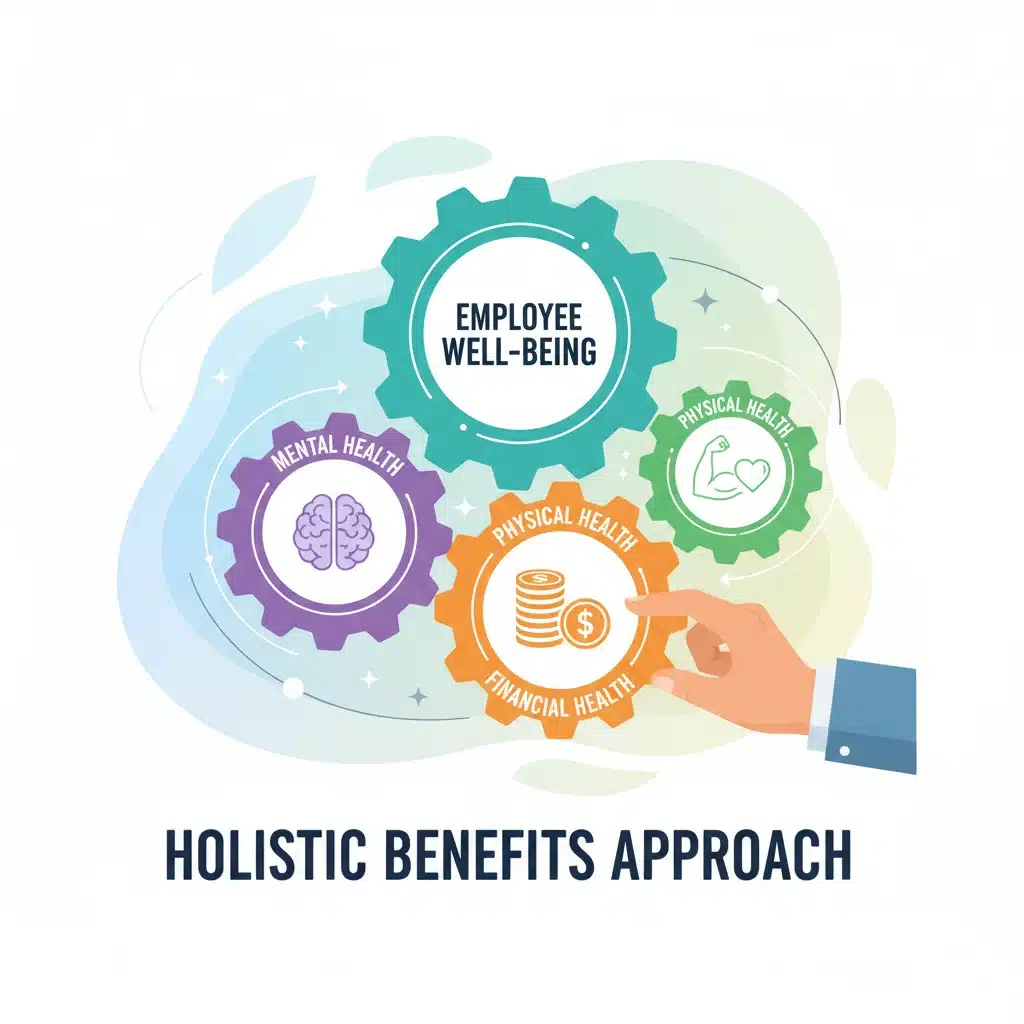
Holistic Well-being: Beyond Physical Health
While physical health has always been a cornerstone of employee benefits, 2026 will see a significant expansion into holistic well-being, encompassing mental, emotional, and social health. This comprehensive view acknowledges that an employee’s overall well-being profoundly impacts their productivity and job satisfaction.
The pandemic accelerated the recognition of mental health as a critical component of employee support. Employers are now realizing that neglecting any aspect of an employee’s well-being can have cascading negative effects on both the individual and the organization.
Integrating Mental and Financial Wellness Programs
Companies are investing in robust mental health support, including access to therapy, counseling, and mindfulness programs. Simultaneously, financial wellness initiatives are gaining traction, providing employees with resources for budgeting, debt management, and retirement planning. These areas are often interconnected, with financial stress frequently impacting mental health.
-
Expanded access to mental health services and platforms.
-
Financial literacy workshops and advisory services.
-
Stress reduction and resilience-building programs.
The focus is on creating an environment where employees feel supported in all facets of their lives, leading to a healthier, more resilient workforce. This holistic approach is not just about providing services but also about fostering a culture of empathy and understanding.
Embracing holistic well-being as a core benefit strategy demonstrates a genuine commitment to employee welfare, contributing to a more engaged, productive, and loyal workforce in the long term.
Financial Resilience and Security as a Core Benefit
Economic uncertainties and rising costs of living have brought financial resilience to the forefront of employee concerns. By 2026, benefits packages will increasingly focus on providing employees with tools and resources to build greater financial security, moving beyond just retirement plans.
This trend reflects a broader understanding that financial stress can significantly impede an employee’s focus and performance. Employers are recognizing their role in empowering employees to navigate their financial journeys more effectively.
Emergency Savings and Debt Management Support
Beyond traditional 401(k) matching, companies are exploring options like emergency savings funds, student loan repayment assistance, and access to financial advisors. These benefits directly address immediate financial pressures, allowing employees to build a stronger safety net.
-
Employer-contributed emergency savings accounts.
-
Student loan repayment and refinancing programs.
-
Access to certified financial planning professionals.
Such offerings demonstrate a commitment to employees’ long-term stability, fostering trust and reducing turnover. A financially secure employee is often a less stressed and more productive employee, benefiting both the individual and the organization.
Prioritizing financial resilience within benefit structures is a proactive step towards creating a stable and confident workforce, essential for navigating future economic challenges successfully.
Continuous Learning and Skill Development Opportunities
The rapid pace of technological advancement and evolving job markets means that continuous learning is no longer optional but a necessity. In 2026, employee benefits will heavily feature robust programs for skill development, upskilling, and reskilling.
Employees are increasingly looking for roles that offer growth opportunities and pathways for career progression. Employers who invest in their workforce’s development not only enhance their employees’ capabilities but also build a more agile and future-proof organization.
Tuition Assistance and Internal Training Academies
Beyond traditional tuition reimbursement, companies are establishing internal academies, offering certifications in high-demand areas, and providing access to online learning platforms. These programs are often designed to align with the company’s strategic needs, creating a win-win scenario.
-
Subsidized access to professional certifications and courses.
-
Internal mentorship and coaching programs.
-
Dedicated time for learning and development during work hours.
Investing in employee education and skill enhancement signals a commitment to their long-term career success within the organization. This fosters loyalty and ensures the workforce remains competitive and adaptable.
By embedding learning and development into their benefits strategy, organizations are not just offering perks; they are investing in their human capital, which is the ultimate driver of innovation and sustained success.
Sustainable and Socially Responsible Benefits
As societal awareness around environmental and social issues grows, employees, particularly younger generations, are seeking employers whose values align with their own. By 2026, benefits will increasingly reflect a commitment to sustainability and corporate social responsibility.
This trend moves beyond traditional benefits to encompass an organization’s broader impact on the world. Employees want to work for companies that are not only profitable but also purpose-driven and ethical.
Eco-Friendly Commuting and Community Engagement
Benefits might include incentives for eco-friendly commuting, such as electric vehicle charging stations or public transport subsidies. Additionally, paid volunteer days, matching charitable donations, and opportunities for employees to engage in community service will become more common.
-
Subsidies for sustainable transportation options.
-
Paid time off for volunteering and community service.
-
Matching programs for employee charitable contributions.
These types of benefits attract socially conscious talent and enhance the company’s reputation as a responsible employer. They contribute to a positive organizational culture and a sense of shared purpose among employees.
Integrating sustainable and socially responsible elements into benefits packages is a powerful way for companies to differentiate themselves, appealing to a workforce that values purpose alongside prosperity.
How to Prepare Your Organization for 2026
The evolving landscape of employee benefits demands proactive and strategic planning. Organizations that begin preparing now will be best positioned to attract and retain top talent in 2026 and beyond. This preparation involves a multi-faceted approach, focusing on understanding current trends and forecasting future needs.
It’s not enough to simply observe these trends; leaders must actively engage in assessing their current offerings, soliciting employee feedback, and designing flexible frameworks that can adapt to rapid changes. The future rewards agility and foresight.
Conducting a Comprehensive Benefits Audit
Start by evaluating your existing benefits package against these emerging trends. Identify gaps and areas where your offerings might fall short of future employee expectations. Engage with employees through surveys and focus groups to understand their priorities and desires.
-
Analyze current benefit utilization rates and employee satisfaction.
-
Benchmark against industry leaders and competitors.
-
Identify opportunities for technology integration in benefit delivery.
Developing a flexible benefits budget and exploring partnerships with innovative benefit providers can also be crucial steps. The goal is to create a dynamic benefits strategy that is both competitive and sustainable.
By taking these proactive steps, organizations can transform their benefits strategy from a static cost center into a powerful talent magnet and a driver of employee well-being and loyalty.
| Key Trend | Brief Description |
|---|---|
| Hyper-Personalization | Tailoring benefits to individual employee needs and life stages using data. |
| Holistic Well-being | Expanding support beyond physical health to mental, emotional, and social wellness. |
| Financial Resilience | Providing tools and resources for employee financial security and stability. |
| Continuous Learning | Offering robust skill development and upskilling opportunities for career growth. |
Frequently Asked Questions About Future Employee Benefits
Hyper-personalization refers to the practice of tailoring employee benefits packages to meet the unique needs, preferences, and life stages of individual employees. It moves beyond generic offerings to provide choices that truly resonate, often powered by data analytics and flexible benefit platforms.
Holistic well-being is crucial because it acknowledges that an employee’s performance and satisfaction are influenced by more than just physical health. Mental, emotional, and financial stability are equally vital, and supporting these areas leads to a more engaged and resilient workforce.
Companies can support financial resilience through various benefits, such as offering access to emergency savings funds, providing student loan repayment assistance, and connecting employees with certified financial advisors. These initiatives help alleviate financial stress and promote long-term security.
Continuous learning is vital for future benefits as it addresses the need for ongoing skill development in a rapidly changing job market. Employers offer programs like tuition assistance, internal training academies, and access to online courses to ensure their workforce remains competitive and adaptable.
Sustainable and socially responsible benefits attract talent, especially younger generations, by aligning with their values. Offerings like eco-friendly commuting incentives, paid volunteer days, and charitable donation matching demonstrate a company’s commitment to purpose beyond profit, enhancing its appeal.
Conclusion
The journey towards 2026 reveals a dynamic and evolving landscape for employee benefits, marked by a profound shift towards personalization, comprehensive well-being, financial security, continuous growth, and ethical responsibility. Organizations that proactively embrace these trends, moving beyond traditional offerings to truly understand and cater to their employees’ diverse needs, will not only enhance their appeal as employers but also cultivate a more engaged, resilient, and future-ready workforce. The strategic investment in these emerging benefits is an investment in human capital, driving both individual success and organizational prosperity in the years to come.
