K-12 Federal Funding: $5 Billion Increase in 2026
Advertisers
The 2026 federal funding changes for K-12 schools include a $5 billion allocation increase, poised to transform educational landscapes across the nation.
The landscape of American education is on the cusp of a significant transformation with the upcoming Education Reform: Federal Funding Changes for K-12 Schools in 2026 – An Allocation Increase of $5 Billion. This substantial investment signals a renewed commitment to bolstering public education, aiming to address long-standing disparities and foster innovative learning environments. What will this injection of capital mean for students, teachers, and communities nationwide?
Understanding the $5 Billion Federal Funding Increase
The announcement of a $5 billion increase in federal funding for K-12 schools in 2026 marks a pivotal moment for education in the United States. This significant boost is not merely an incremental adjustment; it represents a strategic effort to catalyze comprehensive educational reform. The funds are earmarked to tackle critical areas, from improving infrastructure to enhancing instructional quality, ultimately striving for more equitable and effective learning experiences for all students.
Historically, federal funding has played a crucial role in supplementing state and local education budgets, often targeting specific programs or student populations. This new allocation, however, is designed with a broader scope, emphasizing systemic improvements that can resonate throughout the entire K-12 system. Policymakers anticipate that this substantial investment will enable districts to implement innovative strategies that might have been financially out of reach previously.
Anúncios
Historical context of federal education funding
Federal involvement in K-12 education has evolved considerably over the decades, often responding to national priorities and societal needs. Landmark legislation such as the Elementary and Secondary Education Act (ESEA) of 1965 laid the groundwork for federal support, particularly for disadvantaged students. Subsequent reauthorizations and amendments have refined these efforts, aiming to improve accountability and student achievement.
- Early Initiatives: Focused on civil rights and equity, providing resources to underserved communities.
- No Child Left Behind Act (NCLB): Emphasized accountability through standardized testing and school performance.
- Every Student Succeeds Act (ESSA): Shifted more control to states while maintaining federal oversight for equity.
The 2026 increase builds upon this foundation, seeking to empower states and local districts with the resources needed to address contemporary challenges and prepare students for a rapidly changing world. It acknowledges that while local control is vital, federal support can provide the necessary impetus for widespread, meaningful change.
In essence, this $5 billion increase is more than just money; it is a statement of national intent to prioritize education and invest in the future of American youth. The true impact will depend on how these funds are strategically allocated and implemented at the state and local levels, ensuring they translate into tangible benefits for students and educators.
Key Areas of Impact: Where Will the Funds Go?
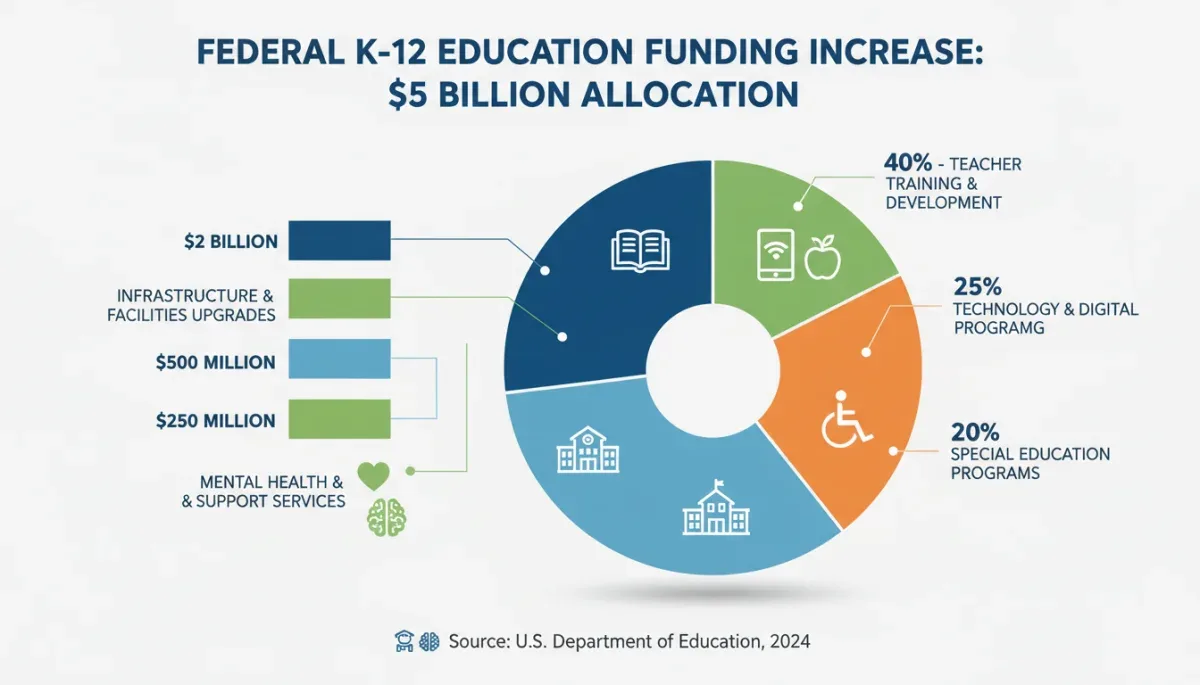
The allocation of the additional $5 billion in federal funding is poised to touch various facets of K-12 education, with strategic priorities aimed at maximizing its impact. While specific distribution mechanisms will vary by state and district, several key areas are expected to receive significant attention, reflecting both long-standing needs and emerging educational challenges. Understanding these target areas is crucial for grasping the potential reach of this reform.
Anúncios
One primary focus is enhancing educational equity. This means directing resources to schools and districts that serve high percentages of low-income students, students with disabilities, and English language learners. The goal is to close achievement gaps and provide all students with access to high-quality learning opportunities, regardless of their socioeconomic background or unique learning needs.

Technology integration and digital literacy
In an increasingly digital world, access to technology and robust digital literacy skills are paramount. A significant portion of the new funding is expected to support technology integration in classrooms, including purchasing new devices, upgrading internet infrastructure, and providing professional development for teachers on effective technology use.
- Device Provision: Ensuring every student has access to a personal learning device.
- Infrastructure Upgrades: Improving broadband access and network capabilities in schools.
- Teacher Training: Equipping educators with skills to leverage technology for instruction.
Another critical area is teacher recruitment and retention. The education sector continues to face challenges in attracting and retaining qualified educators. The additional funding can be utilized for competitive salaries, professional development opportunities, and initiatives to support new teachers, thereby strengthening the teaching workforce.
Furthermore, mental health support and social-emotional learning (SEL) programs are expected to see increased investment. Recognizing the growing mental health crisis among youth, schools will be able to expand access to counselors, psychologists, and social workers, as well as implement comprehensive SEL curricula that foster resilience and well-being. These investments reflect a holistic approach to student development, acknowledging that academic success is intertwined with emotional health.
Challenges and Opportunities in Implementation
While the $5 billion federal funding increase presents a monumental opportunity for K-12 education, its successful implementation will not be without challenges. Navigating the complex landscape of federal, state, and local governance, coupled with diverse community needs, requires careful planning and robust collaboration. However, these challenges also present unique opportunities for innovation and systemic improvement.
One significant challenge lies in ensuring equitable distribution and effective utilization of funds across thousands of diverse school districts. Each district has unique needs, varying from rural to urban settings, and a one-size-fits-all approach is unlikely to be effective. States will need to develop flexible yet accountable frameworks for allocation.
Overcoming bureaucratic hurdles
The process of applying for, receiving, and reporting on federal funds can be administratively burdensome for school districts. Simplifying these processes and providing clear guidance will be crucial to ensure that funds reach classrooms efficiently rather than getting bogged down in red tape.
- Streamlined Application Processes: Reducing complexity for districts seeking funds.
- Enhanced Technical Assistance: Providing support for grant management and reporting.
- Transparent Accountability Measures: Ensuring funds are used effectively and as intended.
An opportunity arises in fostering greater collaboration between stakeholders. This includes federal agencies, state education departments, local school boards, educators, parents, and community organizations. By working together, these groups can ensure that funding decisions are informed by on-the-ground realities and align with broader educational goals.
Moreover, the increased funding offers an opportunity to pilot innovative educational models and scale up successful programs. Districts can experiment with new pedagogical approaches, technology solutions, and support services that address specific student needs. This experimentation, backed by robust evaluation, can lead to the identification of best practices that can be shared and replicated nationwide. Ultimately, the success of this funding initiative hinges on a commitment to strategic planning, transparent communication, and continuous evaluation, transforming potential challenges into catalysts for positive change.
Potential Impact on Student Outcomes and Equity
The ultimate measure of success for the $5 billion federal funding increase in K-12 education will be its tangible impact on student outcomes and the advancement of educational equity. The reform aims to create environments where every student, regardless of their background or location, has the opportunity to thrive academically, socially, and emotionally. This ambitious goal requires a multifaceted approach, addressing both direct instructional needs and broader support systems.
Improved student outcomes are anticipated through several channels. Enhanced resources for classrooms, including up-to-date materials, smaller class sizes, and access to specialized programs, can directly contribute to academic growth. For example, increased funding for literacy initiatives or STEM programs can lead to measurable improvements in reading comprehension and critical thinking skills.
Addressing the achievement gap
A core objective of this funding is to significantly narrow the persistent achievement gap among different student populations. By directing resources to schools serving disadvantaged communities, the reform seeks to provide equitable access to high-quality education, which is a fundamental driver of long-term success.
- Targeted Interventions: Funding for programs supporting struggling learners.
- Early Childhood Education: Investing in pre-K programs to build foundational skills.
- Special Education Services: Ensuring adequate resources for students with disabilities.
Beyond academics, the funding is expected to bolster social-emotional learning (SEL) initiatives. By integrating SEL programs, schools can help students develop crucial life skills such as self-awareness, self-management, social awareness, relationship skills, and responsible decision-making. These skills are vital for navigating personal challenges, fostering positive relationships, and succeeding in post-secondary education and careers.
Moreover, increased investment in mental health services within schools can lead to a more supportive learning environment. When students feel safe, supported, and emotionally well, they are better able to engage in learning and achieve their full potential. The focus on equity means ensuring these critical supports are available to all students, particularly those in high-need areas, thereby fostering a more inclusive and effective educational system for everyone.
State and Local Perspectives on the Funding
The federal funding increase, while a national initiative, will ultimately be implemented and experienced at the state and local levels. The perspectives from state education agencies and individual school districts are crucial in understanding how this $5 billion allocation will translate into practical changes on the ground. These entities are tasked with tailoring federal guidelines to their unique contexts, balancing national objectives with local needs and priorities.
State education departments will play a pivotal role in disseminating funds, providing technical assistance, and overseeing compliance. Many states are already developing strategic plans to align the new federal resources with their existing educational goals and initiatives. This often involves intricate negotiations and collaborations between state legislatures, governors' offices, and local school boards to ensure a coordinated approach.
Varying needs across districts
School districts, ranging from large urban centers to small rural communities, face vastly different challenges. An urban district might prioritize technology infrastructure and mental health services, while a rural district might focus on teacher recruitment and transportation. The federal framework allows for this flexibility, but states must ensure equitable distribution.
- Urban Districts: Often focus on reducing class sizes and addressing high poverty rates.
- Rural Districts: Frequently prioritize attracting and retaining qualified teachers and expanding access to resources.
- Suburban Districts: May focus on advanced curriculum development and specialized programs.
Local school administrators and educators are often the first to identify specific areas where additional funding can have the most immediate and profound impact. Their input is invaluable in ensuring that the funds address genuine needs, from updating outdated textbooks to implementing innovative teaching methods. Engagement with parent-teacher associations and community groups will also be essential to garner support and ensure transparency in how funds are utilized.
Ultimately, the success of this federal investment will largely depend on the ability of state and local entities to effectively translate policy into practice. This requires strong leadership, collaborative planning, and a commitment to accountability, ensuring that the $5 billion increase truly empowers schools to better serve their students and communities.
Long-Term Vision for Education Reform with Increased Funding
The $5 billion increase in federal funding for K-12 schools in 2026 is not merely a short-term financial boost; it is envisioned as a catalyst for a sustained, long-term transformation of the American educational system. The aim extends beyond immediate improvements to fostering a more resilient, equitable, and innovative educational landscape that can adapt to future challenges and opportunities. This long-term vision requires strategic planning and a commitment to continuous improvement.
One key aspect of this long-term vision is the development of sustainable funding models. While the current increase is significant, the goal is to establish mechanisms that ensure consistent and adequate funding for education in the years to come, reducing reliance on temporary allocations. This might involve advocating for more stable federal appropriations or encouraging states to develop robust, equitable funding formulas.
Fostering a culture of innovation
The increased funding provides an unprecedented opportunity to cultivate a culture of innovation within schools. By supporting research into effective pedagogical practices, investing in pilot programs, and encouraging professional learning communities, the reform can drive continuous improvement in teaching and learning.
- Research and Development: Funding for studies on effective educational interventions.
- Professional Growth: Opportunities for educators to explore new teaching methodologies.
- Strategic Partnerships: Collaborations with universities and educational technology companies.
Another crucial element of the long-term vision is strengthening the pipeline of future educators. This includes initiatives to attract talented individuals into the teaching profession, provide comprehensive training, and offer ongoing support and mentorship. A highly qualified and diverse teaching workforce is fundamental to the sustained success of any educational reform.
Furthermore, the reform seeks to better prepare students for the demands of the 21st-century workforce and active citizenship. This involves not only academic rigor but also the development of critical thinking, problem-solving, creativity, and collaboration skills. By investing in these areas, the federal funding aims to equip students with the tools they need to succeed in an ever-evolving global society, ensuring that the impact of this reform extends far beyond the initial allocation.
| Key Point | Brief Description |
|---|---|
| $5 Billion Increase | Significant federal funding boost for K-12 schools in 2026. |
| Equity Focus | Aims to close achievement gaps and support underserved students. |
| Key Allocation Areas | Technology, teacher support, mental health, and infrastructure. |
| Long-Term Vision | Catalyst for sustainable reform and future educational innovation. |
Frequently Asked Questions About Federal K-12 Funding
What is the primary goal of the $5 billion federal funding increase?▼The primary goal is to drive comprehensive education reform, enhance educational equity, and improve student outcomes across K-12 schools in the United States by providing significant additional resources to address critical needs and foster innovation.
Which areas will benefit most from the increased funding?▼Key areas expected to benefit include technology integration and digital literacy, teacher recruitment and retention, mental health support, social-emotional learning programs, and resources for underserved student populations, aiming for holistic improvements.
How will states and local districts implement these new funds?▼States will develop frameworks to distribute funds, providing technical assistance and oversight. Local districts will tailor allocations to specific needs, balancing federal guidelines with local priorities through collaborative planning and community engagement.
What challenges might arise during the implementation process?▼Challenges may include navigating bureaucratic hurdles, ensuring equitable distribution across diverse districts, and effectively aligning federal objectives with local needs. Overcoming these requires strong leadership and transparent accountability.
What is the long-term vision for this education reform?▼The long-term vision is to establish sustainable funding models, foster a culture of innovation within schools, strengthen the teaching profession, and better prepare students with 21st-century skills for future success and active citizenship.
Conclusion
The impending $5 billion increase in federal funding for K-12 schools in 2026 represents a monumental opportunity to reshape the educational landscape across the United States. This investment is poised to drive significant reform, addressing critical areas such as equity, technology, teacher support, and student well-being. While challenges in implementation are inevitable, the collaborative efforts of federal, state, and local stakeholders, coupled with a commitment to strategic allocation and transparent accountability, can transform this financial boost into lasting positive change. Ultimately, this reform aims to foster a more equitable, innovative, and effective educational system that empowers every student to reach their full potential, ensuring a brighter future for generations to come.