Micro-Credentials in 2026: Upskill US Workers in Under 6 Months

Advertisers
Micro-credentials are revolutionizing the US job market in 2026, providing a swift and efficient route for workers to obtain essential skills, fostering substantial career progression in under half a year.
Advertisers
The year 2026 marks a pivotal moment in workforce development, with micro-credentials upskill US workers more rapidly and effectively than ever before. This transformative shift allows individuals to acquire critical skills and advance their careers in less than six months, adapting to the dynamic demands of the modern economy.
The Micro-Credential Revolution: A New Era for US Workforce
The landscape of professional development in the United States is undergoing a profound transformation, largely driven by the burgeoning popularity of micro-credentials. These focused, competency-based certifications are reshaping how American workers acquire and demonstrate skills, offering a streamlined alternative to traditional degree programs. In 2026, their impact is undeniable, providing a crucial pathway for rapid upskilling and reskilling.
Advertisers
This shift isn’t merely a trend; it’s a fundamental change in educational philosophy, emphasizing targeted learning outcomes that are directly applicable to current industry needs. For millions of US workers, micro-credentials represent an accessible, affordable, and efficient route to career advancement and job security in an increasingly competitive global market.
Defining Micro-Credentials: What They Are and Are Not
It’s essential to understand precisely what constitutes a micro-credential. Unlike a full degree, which covers a broad spectrum of knowledge, a micro-credential focuses on a specific skill or set of competencies. They are typically:
- Short-term: Designed to be completed in weeks or a few months, not years.
- Targeted: Focused on a single, verifiable skill or competency.
- Stackable: Often designed to be combined with other micro-credentials or applied towards larger qualifications.
- Industry-relevant: Developed in response to specific employer needs.
They are not a replacement for comprehensive degrees in all instances, but rather a complementary tool that addresses immediate skill gaps and enables continuous learning. Their value lies in their agility and direct applicability.
The Driving Forces Behind Their Growth
Several factors converge to fuel the rapid growth of micro-credentials. The accelerating pace of technological change demands constant skill updates. The rising cost and time commitment of traditional higher education make shorter, more affordable options highly attractive. Furthermore, employers increasingly prioritize demonstrated skills over lengthy academic histories, making micro-credentials a powerful signal of readiness for specific roles. This confluence of factors places micro-credentials at the forefront of workforce development strategies.
Why 2026 is the Tipping Point for Micro-Credentials in the US
While micro-credentials have been gaining traction for several years, 2026 emerges as a critical year for their widespread adoption and integration into the US labor market. Economic forecasts, technological advancements, and evolving employer expectations are converging to solidify their status as a mainstream upskilling solution. The post-pandemic landscape further accelerated the need for flexible and rapid learning solutions, cementing micro-credentials as a cornerstone of future workforce development.
The past few years have seen significant investment from educational institutions, tech companies, and government initiatives into developing and standardizing micro-credential offerings. This infrastructure is now robust enough to support a mass adoption, making them readily available and recognized across various industries.
Economic Imperatives and Skill Gaps
The US economy in 2026 faces persistent skill gaps, particularly in high-growth sectors like technology, healthcare, and advanced manufacturing. Traditional education systems often struggle to keep pace with these rapidly evolving demands. Micro-credentials offer a responsive solution, allowing workers to quickly acquire skills in areas such as:
- Data Science and Analytics
- Cybersecurity Fundamentals
- Artificial Intelligence and Machine Learning Basics
- Cloud Computing Architectures
- Digital Marketing Strategies
These targeted programs bridge the gap between academic theory and practical application, ensuring that the workforce possesses the precise competencies employers need right now. The agility of micro-credential providers allows them to develop and deploy programs much faster than traditional institutions.
Employer Recognition and Integration
Crucially, employer recognition of micro-credentials has grown exponentially. Companies are actively seeking candidates who can demonstrate specific, job-ready skills, often validated by these compact certifications. Many organizations are even partnering with educational providers to co-create micro-credential programs tailored to their internal talent needs, further embedding them into hiring and promotion processes. This direct employer endorsement is a powerful catalyst for their widespread acceptance.
Upskilling in Under 6 Months: Practical Pathways for US Workers
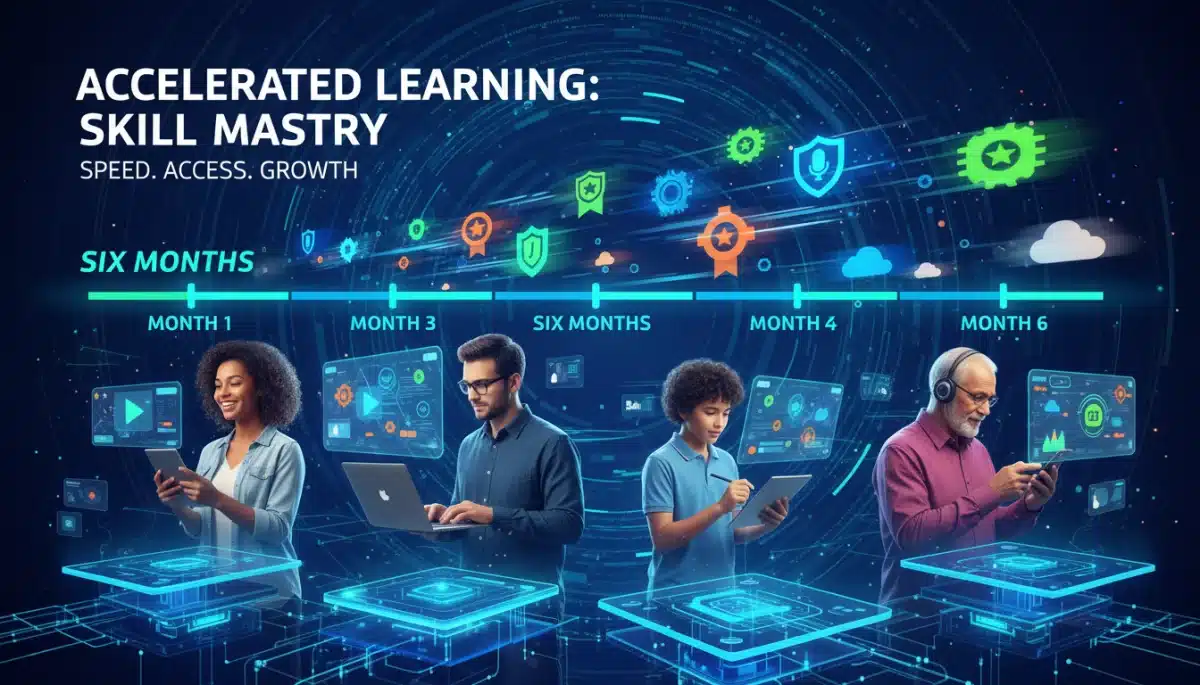
The promise of upskilling in less than six months is a significant draw for US workers looking to enhance their career prospects without committing to long-term academic programs. This rapid turnaround is made possible by the focused nature of micro-credentials, which strip away extraneous content to deliver core competencies efficiently. For busy professionals and those seeking quick career shifts, this accelerated learning model is invaluable.
Many micro-credential programs are designed for flexible, online delivery, allowing individuals to learn at their own pace while balancing existing work and life commitments. This accessibility democratizes skill acquisition, reaching a broader demographic of the American workforce.
Choosing the Right Micro-Credential Program
Navigating the vast array of available micro-credentials requires careful consideration. Workers should evaluate programs based on several key criteria:
- Industry Alignment: Does the credential directly address skills in demand within your target industry?
- Provider Reputation: Is the issuing institution or company reputable and recognized by employers?
- Learning Format: Does the program’s structure (online, hybrid, synchronous, asynchronous) fit your schedule and learning style?
- Cost and ROI: Is the investment justifiable in terms of potential career benefits and salary increases?
Researching program outcomes and employer testimonials can provide valuable insights into the efficacy and value of a particular micro-credential. Many platforms offer free introductory modules or trials, allowing prospective learners to sample the content before committing fully.
Success Stories and High-Impact Fields
Numerous US workers have already leveraged micro-credentials for significant career gains. For instance, a retail manager might acquire a micro-credential in digital marketing analytics, leading to a promotion or a new role in e-commerce. A healthcare assistant could complete a certification in telehealth support, opening doors in remote patient care. Fields experiencing high demand for rapid upskilling include:
- Software Development (e.g., Python, JavaScript)
- Project Management (e.g., Agile, Scrum)
- Data Visualization Tools (e.g., Tableau, Power BI)
- User Experience (UX) Design
- Healthcare Informatics
These examples highlight the versatility and immediate impact of micro-credentials across diverse professional landscapes, proving their efficacy in driving career mobility.
The Role of Technology and Online Platforms in Accelerating Learning
The rapid expansion and effectiveness of micro-credentials are inextricably linked to advancements in educational technology and the proliferation of robust online learning platforms. These digital ecosystems provide the infrastructure necessary for scalable, accessible, and engaging learning experiences, making it possible for millions to upskill simultaneously.
In 2026, these platforms have evolved beyond simple video lectures, offering interactive simulations, AI-powered feedback, and collaborative project spaces that mimic real-world work environments. This technological integration is key to delivering high-quality, short-term learning outcomes.
Innovative Learning Methodologies
Modern online platforms employ a variety of innovative pedagogies to maximize learning efficiency. Gamification elements, personalized learning paths, and adaptive assessments keep learners engaged and ensure mastery of the material. The ability to track progress and receive instant feedback is crucial for maintaining momentum in accelerated programs. Furthermore, virtual labs and sandboxes allow learners to practice new skills in a safe, controlled environment, solidifying their understanding.
Accessibility and Flexibility for Diverse Learners
One of the greatest strengths of technology-driven micro-credentials is their unparalleled accessibility. Workers in rural areas, those with demanding schedules, or individuals with limited mobility can all participate in high-quality learning programs from anywhere with an internet connection. This flexibility is vital for a diverse workforce, ensuring that upskilling opportunities are not limited by geographical or logistical barriers. This democratizes access to advanced skills, fostering a more equitable workforce.
Challenges and Considerations for Micro-Credential Adoption
Despite the immense potential of micro-credentials, their widespread adoption and optimal utility are not without challenges. Addressing these considerations is essential for ensuring their long-term success and maximizing their benefit for US workers and the economy. As with any emerging educational model, there are hurdles related to standardization, recognition, and quality control that need thoughtful solutions.
Stakeholders, including educational providers, employers, and policymakers, must collaborate to overcome these obstacles, ensuring that micro-credentials deliver on their promise of efficient and effective workforce development. Without careful planning, the growth could be fragmented and inconsistent.
Ensuring Quality and Standardization
With a proliferation of micro-credential providers, maintaining consistent quality and establishing recognized standards are paramount. Employers need assurance that a micro-credential from one institution holds comparable value to a similar one from another. Efforts are underway to create accreditation frameworks and industry-recognized benchmarks, but this remains an ongoing challenge. The lack of a universal standard could lead to confusion and diminish the perceived value.
Bridging the Digital Divide
While online learning offers immense accessibility, it also highlights the digital divide. Not all US workers have reliable internet access, suitable devices, or the digital literacy skills required to fully participate in online micro-credential programs. Initiatives aimed at expanding broadband access and providing digital skills training are crucial to ensure equitable participation in this new educational ecosystem. Without addressing this, a significant portion of the workforce could be left behind.
Integration with Traditional Education and Career Paths
Seamless integration of micro-credentials into broader educational pathways and career progression models is another critical area. How do micro-credentials stack up against associate or bachelor’s degrees? Can they be formally recognized for college credit? Establishing clear articulation agreements and pathways will enhance their value and encourage more widespread adoption. This ‘stackability’ is key to long-term career planning.
The Future Outlook: Micro-Credentials Beyond 2026
Looking beyond 2026, the trajectory for micro-credentials in the US workforce is one of continued growth and increasing sophistication. They are not a temporary fix but a fundamental shift in how skills are acquired, validated, and applied throughout a person’s career. The ongoing evolution of technology and industry demands will only solidify their importance as a dynamic tool for lifelong learning.
Expect to see greater personalization, more sophisticated assessment methods, and deeper integration with artificial intelligence to tailor learning experiences to individual needs. The ecosystem of micro-credentials will become more interconnected, offering clearer pathways for professional growth and development.
Personalized Learning and AI Integration
The future of micro-credentials will likely involve highly personalized learning journeys, powered by AI. Algorithms will analyze a worker’s existing skills, career goals, and learning style to recommend specific micro-credentials, optimizing their upskilling path. AI will also enhance assessment methods, providing more nuanced feedback and ensuring genuine competency acquisition. This will make learning even more efficient and targeted.
Government and Industry Partnerships
Expect to see increased collaboration between government entities, educational institutions, and industry leaders to create large-scale micro-credential initiatives. These partnerships will aim to address national skill shortages, support economic development, and ensure that the US workforce remains globally competitive. Funding programs and policy incentives will likely further drive adoption and innovation in this space. This collaborative approach will be vital for sustained growth.
A Culture of Continuous Learning
Ultimately, the rise of micro-credentials is fostering a culture of continuous learning within the US workforce. The idea that education is a one-time event is rapidly becoming obsolete. Instead, workers are embracing the concept of lifelong learning, regularly updating their skills to stay relevant and adaptable. Micro-credentials are the perfect vehicle for this continuous engagement, allowing individuals to remain agile and responsive to career opportunities. This paradigm shift will empower workers to take greater control over their professional development.
Maximizing Your Micro-Credential Investment
For US workers considering micro-credentials, maximizing the investment involves more than simply completing a program. It requires strategic planning, active engagement, and effective showcasing of newly acquired skills. The value of a micro-credential lies not just in the certificate itself, but in how it translates into tangible career benefits and professional growth. A thoughtful approach ensures that the time and resources invested yield the best possible returns.
Understanding how to leverage these credentials in job applications, interviews, and within existing roles is crucial for accelerating career progression. It’s about transforming knowledge into demonstrable capability that employers value.
Showcasing Your New Skills
Once a micro-credential is earned, it’s vital to effectively communicate its value. Update your resume, LinkedIn profile, and professional portfolios to highlight your new skills and the specific competencies validated by the credential. Digital badges, often associated with micro-credentials, can be easily shared across professional networks, providing verifiable proof of achievement. Be prepared to discuss how these skills are directly applicable to the roles you seek or already hold.
Networking and Application
Engage with professional networks and industry communities relevant to your new skills. Attend virtual or in-person events, participate in forums, and connect with professionals in your target field. Actively seek opportunities to apply your newly acquired knowledge in practical projects, whether at your current job, through volunteer work, or personal initiatives. Practical application solidifies learning and provides concrete examples for future employers. The more you use your skills, the more proficient you become.
| Key Aspect | Brief Description |
|---|---|
| Rapid Upskilling | Acquire job-ready skills in under 6 months, addressing immediate industry needs. |
| Industry Relevance | Programs designed to meet specific employer demands in high-growth sectors. |
| Flexibility & Accessibility | Online and flexible formats cater to diverse learners and schedules. |
| Career Advancement | Directly contributes to promotions, new job opportunities, and increased earning potential. |
Frequently Asked Questions About Micro-Credentials
A micro-credential is a certification of a specific skill or competency, typically much shorter and more focused than a traditional degree. They validate targeted knowledge relevant to current industry needs, allowing for rapid skill acquisition and career enhancement in areas like digital marketing or data analytics.
Many micro-credential programs are designed to be completed in a matter of weeks or a few months, often less than six months. This rapid turnaround enables US workers to quickly adapt to new job market demands and acquire essential skills for career advancement.
Yes, employer recognition of micro-credentials is growing significantly, especially by 2026. Many companies actively seek candidates with these certifications, viewing them as proof of specific, job-ready skills that align directly with their workforce needs and industry demands.
Micro-credentials offer benefits such as faster completion times, lower costs, and a highly focused curriculum on in-demand skills. They provide a flexible pathway for continuous learning and career agility, complementing rather than replacing traditional academic qualifications for many professionals.
To choose the right micro-credential, consider your career goals, current skill gaps, and industry demand. Research the program’s content, the provider’s reputation, and its potential return on investment. Look for credentials that offer practical, verifiable skills and strong employer connections.
Conclusion
The rise of micro-credentials by 2026 represents a transformative force in the US labor market, offering unprecedented opportunities for workers to upskill and reskill efficiently. These targeted certifications provide a flexible, accessible, and highly relevant pathway to career advancement, allowing individuals to acquire critical competencies in less than six months. As technology continues to evolve and industry demands shift, micro-credentials will remain an indispensable tool for fostering a dynamic, adaptable, and competitive workforce across the United States, empowering individuals to navigate their professional journeys with greater agility and confidence.
