Retail Sector Analysis 2026: E-commerce Growth & Brick-and-Mortar Impact
Anúncios
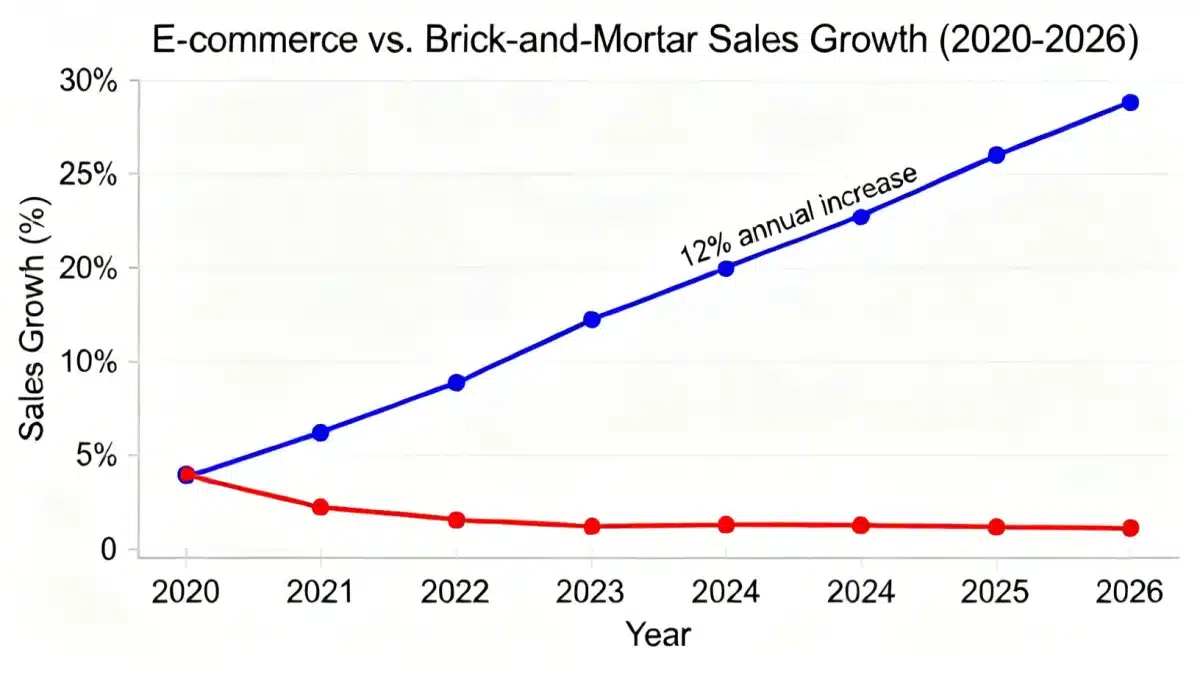
The 2026 retail sector analysis predicts e-commerce will sustain a 12% annual growth, fundamentally altering traditional brick-and-mortar operations and demanding innovative strategies for survival and success.
Anúncios
The retail landscape is in a constant state of flux, but few periods have witnessed transformations as profound as those projected for 2026. As we delve into the Retail Sector Analysis 2026, it becomes unequivocally clear that e-commerce is not just a trend but a dominant force, continuing its impressive 12% annual growth and reshaping the very foundations of how brick-and-mortar stores operate across the United States. This ongoing digital evolution presents both formidable challenges and unprecedented opportunities for retailers.
The Unyielding Ascent of E-commerce in 2026
E-commerce’s trajectory remains steeply upward, cementing its role as the primary engine of retail growth. By 2026, online sales are expected to capture an even larger share of the consumer wallet, driven by technological advancements and evolving consumer behaviors. This persistent expansion is not merely about convenience; it reflects a fundamental shift in how consumers discover, evaluate, and purchase products.
Anúncios
The factors contributing to this sustained growth are multifaceted. Enhanced mobile shopping experiences, personalized recommendations powered by AI, and streamlined logistics have all contributed to making online purchasing an increasingly attractive option. Furthermore, the integration of social commerce and live shopping events continues to blur the lines between entertainment and retail, drawing in younger demographics and fostering new purchasing habits.
Technological Drivers of E-commerce Dominance
- AI-Powered Personalization: Advanced algorithms tailor product recommendations, marketing messages, and even website layouts to individual consumer preferences, significantly boosting conversion rates.
- Seamless Mobile Experience: Optimized mobile applications and responsive websites ensure a smooth and intuitive shopping journey, catering to the ubiquitous smartphone user.
- Augmented Reality (AR) Shopping: AR tools allow customers to virtually try on clothes, place furniture in their homes, or visualize products in their environment, reducing uncertainty and returns.
- Advanced Logistics and Fulfillment: Faster shipping options, including same-day and next-day delivery, and sophisticated inventory management systems meet consumer demand for instant gratification.
The sophistication of e-commerce platforms is continually evolving, moving beyond simple transactional websites to immersive digital storefronts that offer rich, interactive experiences. Retailers neglecting these technological imperatives risk falling further behind in an increasingly competitive market. Understanding these drivers is crucial for any business looking to capitalize on the ongoing digital revolution.
Brick-and-Mortar’s Evolving Role and Challenges
While e-commerce flourishes, traditional brick-and-mortar retail faces persistent headwinds. The challenge isn’t extinction, but rather a profound redefinition of purpose. Physical stores must offer something beyond mere product availability; they need to provide experiences that cannot be replicated online. This necessitates significant investment in store design, staff training, and technological integration.
Many traditional retailers are struggling to adapt, burdened by legacy systems, high operational costs, and declining foot traffic. The pressure to innovate is immense, and those who fail to transform risk becoming relics of a bygone era. However, for those willing to embrace change, brick-and-mortar still holds immense potential as a complementary channel to digital sales.
Navigating the Physical Retail Landscape
The traditional retail model has been under scrutiny for years, but 2026 demands a radical shift. Stores are no longer just points of sale; they are becoming experience hubs, brand showrooms, and logistical centers for online orders. This hybrid approach, often termed ‘omnichannel,’ is critical for survival.
- Experiential Retail: Creating engaging in-store experiences, such as workshops, product demonstrations, or personalized styling sessions, to draw customers in.
- Showrooming and BOPIS: Leveraging physical locations for customers to see and touch products before purchasing online, or offering ‘Buy Online, Pick Up In Store’ services for convenience.
- Hyper-Local Fulfillment: Utilizing stores as micro-distribution centers to facilitate faster local deliveries and minimize shipping costs.
- Community Hubs: Positioning stores as gathering places that foster community engagement and brand loyalty, offering more than just transactional interactions.
The future of brick-and-mortar is not about competing directly with e-commerce on price or convenience, but rather offering unique value propositions that enhance the overall customer journey. This requires a deep understanding of local demographics and consumer preferences to tailor offerings effectively.
Omnichannel Strategies: The New Retail Imperative
The concept of omnichannel, once a buzzword, has become a fundamental necessity for retail success by 2026. It’s no longer sufficient to have an online store and a physical store; these channels must be seamlessly integrated to provide a consistent and coherent customer experience. Consumers expect to move effortlessly between digital and physical touchpoints, and retailers must deliver on this expectation.
An effective omnichannel strategy ensures that customer data, inventory, and marketing efforts are unified across all channels. This integration allows for personalized experiences, efficient order fulfillment, and a comprehensive view of the customer journey. Without a robust omnichannel approach, retailers risk disjointed experiences that frustrate customers and lead to lost sales.
Key Components of an Integrated Omnichannel Approach
Implementing a successful omnichannel strategy requires more than just technology; it demands a cultural shift within the organization. From marketing to logistics, every department must work in synergy to deliver a unified brand experience.
- Unified Customer Data: Centralized customer profiles that capture interactions across all channels, enabling personalized marketing and service.
- Integrated Inventory Management: Real-time visibility of stock levels across all stores and warehouses, preventing overselling and facilitating efficient fulfillment options like BOPIS (Buy Online, Pick Up In Store) or ship-from-store.
- Consistent Branding and Messaging: Ensuring that the brand voice, visual identity, and promotional messages are uniform across all digital and physical touchpoints.
- Seamless Returns and Exchanges: Allowing customers to return or exchange products purchased online at a physical store, or vice-versa, without friction.
The ultimate goal of omnichannel is to create a frictionless shopping experience that meets the customer wherever they are, on their preferred channel. This customer-centric approach is vital for building loyalty and driving repeat business in the competitive 2026 retail landscape.
Consumer Behavior Shifts Driving Retail Innovation
The retail sector’s evolution is inherently tied to shifts in consumer behavior. By 2026, consumers are more informed, demanding, and digitally savvy than ever before. Their expectations for convenience, personalization, and ethical practices are driving retailers to innovate at an unprecedented pace. Understanding these evolving preferences is paramount for strategic planning.
Sustainability, transparency, and social responsibility are no longer niche concerns; they are mainstream expectations that influence purchasing decisions, particularly among younger generations. Retailers must not only offer compelling products but also align with their customers’ values to build trust and loyalty.
Emerging Consumer Preferences and Their Impact
The modern consumer is not a monolithic entity; various demographic groups exhibit distinct purchasing patterns and values. However, some overarching trends are shaping the entire market, compelling retailers to rethink their strategies.
- Demand for Instant Gratification: Fueled by e-commerce, consumers expect faster delivery and instant access to products and information.
- Ethical Consumption: A growing preference for brands that demonstrate environmental responsibility, fair labor practices, and community involvement.
- Personalized Experiences: Consumers expect tailored recommendations and customized interactions based on their past behavior and preferences.
- Digital-First Research: The vast majority of purchase journeys now begin online, even for products ultimately bought in physical stores.
These behavioral shifts underscore the need for retailers to be agile and responsive. Those who can anticipate and adapt to these changing consumer demands will be best positioned for success in the dynamic 2026 retail environment. Ignoring these trends is a recipe for obsolescence.
The Role of Data Analytics and AI in Retail Success
In 2026, data analytics and artificial intelligence (AI) are no longer optional tools but indispensable assets for retail businesses. The sheer volume of data generated by online and offline interactions provides an unparalleled opportunity to understand customer behavior, optimize operations, and predict future trends. Retailers who effectively harness this data gain a significant competitive edge.
AI-driven insights can inform everything from inventory management and supply chain optimization to personalized marketing campaigns and fraud detection. By automating complex processes and providing predictive capabilities, AI empowers retailers to make more informed decisions, reduce costs, and enhance the customer experience.
Leveraging AI and Data for Competitive Advantage
The application of AI and data analytics extends across all facets of retail, transforming traditional practices and opening new avenues for innovation. From the back office to the storefront, intelligent systems are revolutionizing how businesses operate.
- Predictive Analytics for Inventory: AI models forecast demand with higher accuracy, minimizing stockouts and overstocking, leading to significant cost savings.
- Personalized Marketing: AI analyzes customer data to deliver highly relevant product recommendations and promotional offers, increasing engagement and conversion.
- Optimized Pricing Strategies: Dynamic pricing algorithms adjust product prices in real-time based on demand, competitor pricing, and inventory levels.
- Enhanced Customer Service: AI-powered chatbots and virtual assistants provide instant support, resolving queries efficiently and freeing up human agents for more complex issues.
The ability to collect, analyze, and act upon data is a critical differentiator in the 2026 retail landscape. Businesses that invest in robust data infrastructure and AI capabilities will be better equipped to navigate market volatility and capitalize on emerging opportunities.
Future Outlook: Adapt or Be Left Behind
The retail sector in 2026 is characterized by rapid change and heightened competition. The continued 12% annual growth of e-commerce is not merely a statistic; it’s a powerful indicator of a fundamental shift that demands strategic adaptation from all players. Brick-and-mortar stores must evolve beyond their traditional roles, embracing experiential retail and seamless integration with digital channels to remain relevant.
Retailers who prioritize a customer-centric, omnichannel approach, leveraging data analytics and AI to understand and meet evolving consumer demands, will be the ones that thrive. The future belongs to those who are agile, innovative, and willing to continuously reinvent themselves in response to the dynamic market forces at play.
Key Strategies for Retail Resilience in 2026
To navigate the complexities of the 2026 retail environment, businesses must adopt a forward-thinking mindset and implement strategies that foster resilience and growth. This involves a blend of technological adoption, customer focus, and operational efficiency.
- Invest in Digital Transformation: Continuously upgrade e-commerce platforms, mobile capabilities, and digital marketing tools.
- Redefine Physical Store Purpose: Transform brick-and-mortar locations into experience centers, showrooms, or local fulfillment hubs.
- Embrace Data-Driven Decision Making: Utilize AI and analytics to optimize operations, personalize experiences, and predict market trends.
- Focus on Sustainability and Ethics: Align brand values with consumer expectations for social and environmental responsibility.
The retail journey into 2026 is one of continuous evolution. Success will hinge on the ability to anticipate change, innovate proactively, and put the customer at the very core of every business decision. Those who resist this transformation risk becoming footnotes in the history of retail.
| Key Point | Brief Description |
|---|---|
| E-commerce Growth | Projected 12% annual growth, driven by tech and consumer preference for online shopping. |
| Brick-and-Mortar Impact | Physical stores must transform into experience hubs, showrooms, or fulfillment centers. |
| Omnichannel Imperative | Seamless integration of online and offline channels is crucial for consistent customer experience. |
| Data & AI Role | Essential for personalized marketing, inventory optimization, and informed decision-making. |
Frequently Asked Questions About the 2026 Retail Sector
E-commerce is projected to continue its robust 12% annual growth by 2026. This sustained expansion is driven by technological advancements, enhanced mobile shopping experiences, and evolving consumer preferences for convenience and personalization in their purchasing journeys.
Brick-and-mortar stores must transform from transactional points to experiential hubs, brand showrooms, or local fulfillment centers. They need to offer unique in-store experiences, integrate with online channels for services like BOPIS, and leverage their physical presence to complement digital sales.
Omnichannel refers to the seamless integration of all sales and marketing channels to provide a unified customer experience. It’s crucial for 2026 retail because consumers expect consistent interactions across digital and physical touchpoints, demanding a cohesive and frictionless shopping journey.
Data analytics and AI are indispensable for retail success by 2026. They enable personalized marketing, optimize inventory management, inform pricing strategies, and enhance customer service through predictive insights and automation, giving retailers a significant competitive edge.
Key shifts include a heightened demand for instant gratification, a strong preference for ethical and sustainable brands, expectations for personalized shopping experiences, and a digital-first approach to product research. Retailers must align with these values to build trust and loyalty.
Conclusion
The Retail Sector Analysis 2026 paints a clear picture of a dynamic industry driven by relentless e-commerce growth and fundamental shifts in consumer expectations. The consistent 12% annual expansion of online retail necessitates a proactive and adaptive approach from traditional brick-and-mortar establishments. Success in this evolving landscape is not about choosing between online and offline, but rather about seamlessly integrating both into a cohesive, customer-centric omnichannel strategy. Retailers that embrace technological advancements, leverage data intelligently, and prioritize unique customer experiences will not only survive but thrive amidst the ongoing transformation, ensuring their relevance and profitability in the years to come.