2026 Commodities Outlook: Gold, Oil, Agriculture
Advertisers
The 2026 commodities outlook for gold, oil, and agricultural futures will be shaped by a complex interplay of economic growth, geopolitical stability, and supply chain dynamics.
As we approach the mid-decade mark, understanding the 2026 outlook for commodities: gold, oil, and agricultural futures analysis becomes crucial for investors and businesses alike. What factors will drive these essential markets, and how can you position yourself to navigate the evolving landscape?
The Global Economic Backdrop Influencing Commodities in 2026
The global economy in 2026 is expected to continue its recovery trajectory, albeit with regional variations and persistent inflation concerns. This broader economic environment forms the bedrock upon which commodity prices are built, directly impacting demand and investor sentiment across various sectors.
Several macroeconomic indicators will be particularly influential. Interest rate policies from major central banks, particularly the Federal Reserve and the European Central Bank, will dictate the cost of capital and, by extension, investment flows into tangible assets like commodities. Furthermore, the pace of industrial output in key manufacturing hubs, such as China and Germany, will provide critical signals for demand in energy and industrial metals.
Anúncios
Inflationary Pressures and Monetary Policy
Persistent inflationary pressures could lead central banks to maintain a hawkish stance, potentially strengthening the US dollar. A stronger dollar typically makes dollar-denominated commodities more expensive for international buyers, which can dampen demand. Conversely, a weaker dollar could provide a tailwind for commodity prices.
- Higher interest rates increase the cost of holding non-yielding assets like gold.
- Monetary tightening can slow economic growth, reducing demand for industrial commodities.
- Fiscal stimulus measures, if enacted, could reignite inflation, boosting commodity appeal.
Understanding these intertwined economic forces is paramount for forecasting commodity performance. The delicate balance between controlling inflation and fostering sustainable growth will heavily influence market dynamics, creating both opportunities and risks for investors.
In conclusion, the overarching global economic climate, characterized by central bank actions and industrial activity, will significantly shape the demand and pricing for commodities in 2026. Monitoring these broad trends is essential for any investor looking to engage with the commodity markets.
Gold's Shifting Role: Safe Haven or Inflation Hedge in 2026?
Gold has historically served as a dual-purpose asset: a safe haven during economic uncertainty and a hedge against inflation. In 2026, its role will be continually tested by evolving financial landscapes and geopolitical events, challenging traditional perceptions of its value.
Anúncios
The precious metal's performance will largely depend on the interplay between real interest rates, the strength of the US dollar, and the general level of market volatility. If inflation remains elevated while interest rates struggle to keep pace, gold's appeal as an inflation hedge could strengthen. However, if central banks successfully tame inflation and real rates rise significantly, the opportunity cost of holding gold increases.
Geopolitical Tensions and Investor Sentiment
Geopolitical instability, such as regional conflicts or trade disputes, often drives investors towards gold as a safe store of value. The unpredictability of global politics means that this demand factor could emerge rapidly and significantly impact prices.
- Escalating international conflicts tend to boost gold prices.
- Increased market uncertainty encourages flight to safety, benefiting gold.
- Central bank gold purchases, often a response to de-dollarization efforts, provide underlying support.
Furthermore, technological advancements in mining and exploration could influence supply dynamics, though gold supply tends to be relatively inelastic in the short term. Investor sentiment, often swayed by news cycles and speculative trading, also plays a considerable role in daily price movements.
Ultimately, gold's trajectory in 2026 will be a complex dance between fundamental economic drivers and the unpredictable nature of global events. Investors should closely watch inflation data, real interest rates, and geopolitical developments to gauge gold's potential.
The Volatile Energy Market: Oil Futures in 2026
Oil, the lifeblood of the global economy, is perennially one of the most volatile commodities. The 2026 outlook for oil futures will be shaped by a delicate balance of supply-side constraints, demand recovery, and the accelerating global energy transition.
On the supply side, OPEC+ decisions will remain paramount. Their ability to manage production levels in response to market conditions, coupled with potential disruptions from geopolitical hotspots, will dictate crude availability. Non-OPEC supply, particularly from US shale, will also be a critical factor, with technological advancements potentially unlocking new production efficiencies.
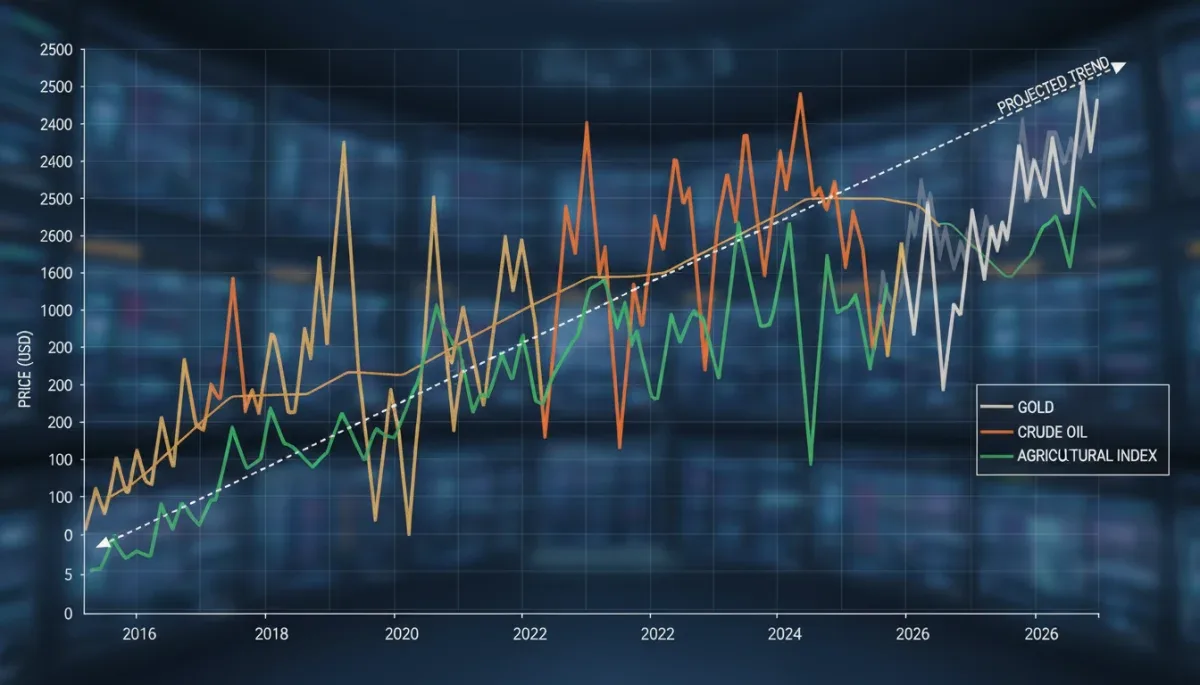

Demand for oil, while recovering from previous downturns, faces a long-term headwind from the increasing adoption of electric vehicles and renewable energy sources. However, short-to-medium term demand will still be robust, driven by industrial activity, air travel, and emerging market growth.
Energy Transition and Investment in Fossil Fuels
The global push towards decarbonization creates a paradox for oil markets. While long-term demand is expected to decline, underinvestment in new fossil fuel projects due to environmental pressures could lead to supply shortages in the near to medium term, potentially driving prices higher.
- Increased EV adoption reduces gasoline demand over time.
- Renewable energy expansion impacts power generation demand for oil.
- Government policies supporting green initiatives can accelerate demand shifts.
Geopolitical events, such as conflicts in major oil-producing regions or sanctions against key exporters, can also rapidly alter supply dynamics and introduce significant price spikes. The strategic petroleum reserves of major consuming nations will also play a role in mitigating extreme volatility.
In summary, the oil market in 2026 will likely continue its characteristic volatility, influenced by OPEC+ actions, geopolitical tensions, and the pace of the global energy transition. Investors must navigate these complexities carefully.
Agricultural Futures: Feeding a Growing World in 2026
Agricultural futures, encompassing staples like corn, wheat, and soybeans, are crucial for global food security and represent a significant investment class. The 2026 outlook will be heavily influenced by climate patterns, geopolitical stability, and evolving consumption trends.
Weather remains the most unpredictable and impactful factor. Droughts, floods, and extreme temperatures in major agricultural regions can drastically reduce yields and disrupt supply chains, leading to price surges. Conversely, favorable weather conditions can result in bumper harvests, putting downward pressure on prices.
Climate Change and Sustainable Farming Practices
The long-term effects of climate change are increasingly evident, necessitating a shift towards more resilient and sustainable farming practices. Investment in agricultural technology, such as precision farming and genetically modified crops, will be essential for ensuring consistent yields.
- Changing rainfall patterns affect crop growth and irrigation needs.
- Increased frequency of extreme weather events creates supply uncertainty.
- Technological innovations in agriculture can mitigate some climate risks.
Geopolitical factors, such as export restrictions, trade agreements, and conflicts affecting shipping routes, can also significantly impact global food prices and availability. Consumer preferences, including the growing demand for plant-based proteins, will influence planting decisions and market dynamics.
Furthermore, the interplay between food and energy prices, particularly through biofuel production, adds another layer of complexity. High energy prices can increase the cost of farming inputs, while policies supporting biofuels can divert crops from food markets.
Therefore, agricultural futures in 2026 will be a complex arena, driven by the unpredictable forces of nature, global policy decisions, and evolving consumer habits. Monitoring these diverse factors is key for understanding market movements.
Investment Strategies for the 2026 Commodities Landscape
Navigating the 2026 commodities landscape requires a thoughtful and diversified approach. Investors should consider a range of strategies to capitalize on potential opportunities while mitigating inherent risks in gold, oil, and agricultural futures.
Diversification is paramount. Rather than concentrating on a single commodity, spreading investments across different sectors can help cushion against individual market downturns. This could involve a mix of energy, precious metals, and agricultural assets, tailored to an investor's risk tolerance and outlook.
Utilizing Futures Contracts and ETFs
Futures contracts offer leverage and direct exposure to commodity price movements, but they also carry significant risk. Exchange-Traded Funds (ETFs) and Exchange-Traded Notes (ETNs) provide a more accessible way for retail investors to gain exposure to commodity baskets or individual commodities without directly managing futures contracts.
- Commodity ETFs track indices or invest directly in physical commodities.
- ETNs are debt instruments that track commodity performance.
- Managed futures funds offer professional management and diversification.
Understanding the contango and backwardation of futures curves is also crucial, as these market structures can impact returns from futures-based investments. Active management and a keen eye on global macroeconomic and geopolitical developments will be essential.
Risk management, including setting stop-loss orders and position sizing, cannot be overstated in volatile commodity markets. Additionally, considering the long-term trends of decarbonization and sustainable agriculture can help identify emerging opportunities beyond short-term price fluctuations.
In conclusion, a well-researched, diversified, and actively managed investment strategy, utilizing appropriate financial instruments, will be key to successfully engaging with the commodity markets in 2026.
Key Risks and Opportunities in the 2026 Commodities Market
The 2026 commodities market presents a unique blend of significant risks and compelling opportunities. Understanding both sides of this coin is essential for making informed decisions and protecting capital.
One of the primary risks is geopolitical instability. Conflicts, trade wars, and political shifts can rapidly disrupt supply chains, alter demand patterns, and introduce sudden price volatility across all commodity sectors. Another risk is the unpredictability of climate change, which can severely impact agricultural yields and energy demand.
Technological Advancements and Market Disruptions
While often seen as a positive, rapid technological advancements can also be a risk. For instance, breakthroughs in battery technology could accelerate the decline in oil demand, while new agricultural techniques could lead to oversupply in specific crops.
- Sudden policy changes can create market shocks.
- Economic recessions can sharply reduce commodity demand.
- Currency fluctuations impact the purchasing power of international buyers.
However, alongside these risks are substantial opportunities. The ongoing global energy transition, for example, creates demand for new commodities like lithium, copper, and rare earth metals. Sustainable agriculture and food technology also present investment avenues in areas like alternative proteins and vertical farming.
Gold, in times of persistent inflation or financial system stress, could see renewed interest as a store of value. Furthermore, demographic shifts and population growth in emerging markets will continue to drive fundamental demand for food and energy, creating long-term growth prospects for agricultural and energy commodities.
Ultimately, the 2026 commodities market will reward those who are diligent in their research, adaptable in their strategies, and capable of discerning between transient market noise and fundamental shifts. A balanced perspective on risks and opportunities is crucial.
| Key Commodity | 2026 Outlook Factor |
|---|---|
| Gold | Inflation hedge vs. rising real interest rates. |
| Oil | OPEC+ policy, geopolitical risks, energy transition pace. |
| Overall Market | Global economic growth, central bank policies, geopolitical events. |
Frequently Asked Questions About 2026 Commodities
What are the primary drivers for gold prices in 2026?▼Gold prices in 2026 will primarily be driven by real interest rates, the strength of the US dollar, and geopolitical stability. Persistent inflation could boost its appeal as a hedge, while rising real rates might temper demand for the non-yielding asset. Central bank policies and global uncertainties will also play a key role.
How will the energy transition impact oil futures in 2026?▼The energy transition will create a complex dynamic for oil futures. While long-term demand may face headwinds from renewables and EVs, underinvestment in new fossil fuel projects could lead to supply shortages in the mid-term, potentially supporting prices. OPEC+ decisions and geopolitical events remain critical.
What factors will most affect agricultural commodity prices?▼Agricultural commodity prices in 2026 will be most affected by climate patterns, including droughts and floods, which impact yields. Geopolitical stability affecting trade routes, global demand driven by population growth, and the cost of farming inputs also significantly influence market dynamics for crops like corn, wheat, and soybeans.
Is investing in commodities a good strategy for 2026?▼Investing in commodities can be a valuable strategy for 2026, offering diversification and potential inflation hedging. However, it involves significant risks due to market volatility, geopolitical events, and economic shifts. A diversified approach across various commodity sectors, combined with thorough research and risk management, is advisable.
What are the biggest risks for commodity investors in 2026?▼The biggest risks for commodity investors in 2026 include unpredictable geopolitical events, which can cause sudden supply disruptions and price spikes. Climate change impacts on agricultural output, rapid shifts in global economic growth, and sudden policy changes by major governments or central banks also pose substantial risks to market stability.
Conclusion
The 2026 outlook for commodities—gold, oil, and agricultural futures—is poised to be a period of dynamic shifts and complex interactions. Global economic growth, central bank monetary policies, geopolitical developments, and the accelerating energy transition will collectively dictate market trajectories. While inherent volatility and risks persist, particularly from climate change and political instability, opportunities for informed investors remain. A strategic approach, emphasizing diversification and continuous monitoring of both macro and microeconomic factors, will be crucial for navigating these essential markets successfully and capitalizing on their evolving landscape.