2026 Vision Benefits: Save Up to $150 Annually
Advertisers
Comparing 2026 vision benefits plans can uncover significant annual savings, empowering individuals to reduce eye care costs by up to $150 annually.
Navigating the complex world of vision benefits can often feel overwhelming, but understanding The 2026 Vision Benefits Landscape: A Comparison of Plans to Save You Up to $150 Annually is more crucial than ever. With evolving healthcare options, knowing how to choose the right plan can significantly impact your wallet and your eye health. This guide aims to demystify the choices, helping you make informed decisions that could lead to substantial annual savings.
Understanding the Basics of Vision Benefits in 2026
As we look towards 2026, the foundational elements of vision benefits remain focused on providing access to essential eye care. These plans are designed to help individuals manage the costs associated with eye exams, corrective lenses, and sometimes even discounts on advanced procedures. However, the specifics of what's covered, and how much you'll pay out-of-pocket, can vary wildly between providers and plan types.
It's important to differentiate between vision insurance and medical insurance. While medical insurance might cover eye injuries or diseases, vision plans specifically address routine eye care, such as annual exams, glasses, and contact lenses. Understanding this distinction is the first step in making an an informed decision about your coverage.
Anúncios
Key Components of Vision Plans
Most vision plans share common components, but the details within each can significantly impact your annual costs. Being familiar with these terms will help you compare plans effectively and avoid surprises.
- Premiums: The monthly or annual fee you pay to maintain your vision coverage. This is a fixed cost regardless of whether you use your benefits.
- Deductibles: The amount you must pay out of pocket before your insurance benefits begin to cover costs. Some vision plans have no deductible, making initial visits more affordable.
- Co-pays: A fixed amount you pay for a covered service, such as an eye exam or a new pair of glasses, after you've met your deductible (if applicable).
- Allowances: The maximum amount your plan will pay towards frames or contact lenses. If your chosen items exceed this allowance, you pay the difference.
By carefully examining these components across different plans, you can begin to identify which options align best with your anticipated eye care needs and budget. A lower premium might seem attractive, but higher deductibles or lower allowances could negate those initial savings if you frequently need new eyewear.
In conclusion, a solid understanding of these basic terms and how they interact within a vision plan is paramount. It allows you to move beyond superficial comparisons and delve into the true financial implications of each option, setting the stage for smart savings in 2026.
Comparing Major Vision Benefit Providers for 2026
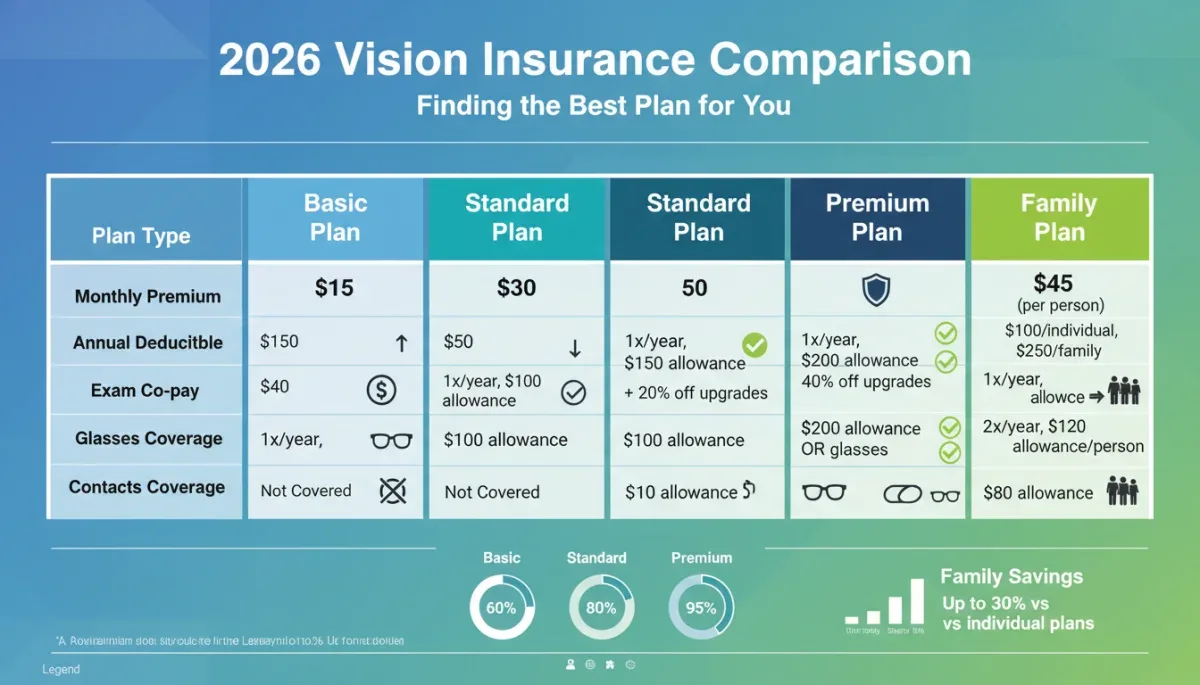
The 2026 landscape for vision benefits includes a variety of providers, each offering different strengths and plan structures. While the core services are similar, the network of providers, the types of eyewear available, and the overall cost structure can differ significantly. It's essential to look beyond just the names and delve into the specifics of what each major player brings to the table.
Anúncios
Leading providers like VSP, EyeMed, and Davis Vision continue to dominate the market, but newer, more localized options are also emerging. Each has its own network of optometrists and ophthalmologists, as well as affiliated optical retailers. Your current eye care provider or preferred eyewear store might influence which plan is most suitable for you.
VSP: A Closer Look at Their 2026 Offerings
VSP (Vision Service Plan) is known for its extensive network of independent eye doctors and a strong focus on eye health. In 2026, VSP plans generally emphasize comprehensive eye exams and often provide generous allowances for frames and contact lenses. They typically offer multiple tiers of plans, allowing individuals to choose between more basic coverage and premium options with enhanced benefits.
- Network Strength: One of the largest networks of independent eye doctors, offering a wide choice of providers.
- Eyewear Options: Often includes discounts on lens enhancements, such as anti-reflective coatings and progressive lenses.
- Member Perks: May include exclusive member offers and discounts on laser vision correction.
VSP's reputation for quality care and a broad selection of eyewear makes it a popular choice for many. Their plans often provide good value for those who prioritize seeing an independent practitioner.
EyeMed and Davis Vision: Key Differences in 2026
EyeMed and Davis Vision represent other significant players in the 2026 vision benefits market, each with distinct characteristics. EyeMed, for instance, often boasts a strong network that includes many retail optical chains, making it convenient for those who prefer one-stop shopping for their eye care needs. Davis Vision, on the other hand, frequently partners with specific eyewear manufacturers, sometimes offering unique frame selections.
When comparing these two, consider your purchasing habits. Do you prefer the convenience of retail chains, or are you looking for specific brands of eyewear? These preferences can guide your decision between EyeMed and Davis Vision.
EyeMed's Retail-Centric Approach
EyeMed plans in 2026 are likely to continue their focus on providing access through a vast network of both independent and retail providers. This often includes popular optical stores, which can be a major draw for individuals seeking convenience and a wide range of frame styles immediately available for purchase.
- Retail Access: Extensive network including LensCrafters, Pearle Vision, Target Optical, and more.
- Flexibility: Often offers flexibility in choosing between glasses and contact lenses, with specific allowances for each.
- Online Options: Growing integration with online eyewear retailers for added convenience.
EyeMed is a strong contender for those who value variety and accessibility to large optical retailers.
Davis Vision's Value Proposition
Davis Vision, in 2026, typically emphasizes a value-driven approach, often with strong partnerships that can lead to lower out-of-pocket costs for specific frames and lenses. Their plans are designed to be cost-effective while still providing comprehensive coverage for routine eye care.
They often have a more curated selection of eyewear available within their network, which can be beneficial for those who are comfortable with the choices offered and prioritize affordability.
- Cost-Effectiveness: Often provides competitive pricing, especially within their network of preferred providers.
- Eyewear Selection: Strong relationships with certain frame manufacturers can lead to exclusive benefits.
- Simplicity: Plans are often straightforward, making it easier to understand benefits and costs.
Choosing between EyeMed and Davis Vision often comes down to your priorities: convenience and broad retail access versus a potentially more curated, value-focused experience.
In summary, a thorough comparison of these major providers, taking into account their unique strengths and network structures, is crucial for selecting the vision benefit plan that best fits your individual needs and lifestyle in 2026.
Strategies to Save Up to $150 Annually on Vision Care
Achieving significant savings on your vision care in 2026 requires a proactive approach and a clear understanding of how to leverage your benefits. Simply having a plan isn't enough; you need to strategize to maximize its value and minimize your out-of-pocket expenses. The goal is to save up to $150 annually, which is an achievable target with careful planning.
One of the most effective strategies involves understanding your plan's allowances and limitations. Many plans offer a set allowance for frames or contact lenses. By choosing eyewear that falls within this allowance, or only slightly exceeds it, you can avoid significant additional costs. Shopping around for frames that are both stylish and within your budget is key.
Maximizing Your Plan's Benefits
To truly save money, you need to be an informed consumer of your vision benefits. This means more than just knowing your co-pay; it involves understanding the full spectrum of what your plan offers and how to utilize it efficiently.
- Annual Eye Exams: Make sure to schedule your annual eye exam. Many plans cover this fully, and it's crucial for maintaining eye health and detecting issues early. Neglecting this could lead to more expensive problems down the line.
- Utilize Discounts: Beyond the standard coverage, many vision plans offer additional discounts on services like laser vision correction, extra pairs of glasses, or even non-prescription sunglasses. Always inquire about these supplementary benefits.\
- In-Network Providers: Stick to in-network providers to ensure you receive the maximum benefit. Out-of-network services often come with higher co-pays or a lower percentage of coverage.
By actively engaging with your plan's features and taking advantage of every benefit available, you can significantly reduce your annual vision care expenditures. It's about being smart with your choices and not leaving money on the table.
Impact of Advanced Lens Technology on 2026 Vision Costs
The rapid advancements in lens technology are revolutionizing vision correction, offering enhanced clarity, comfort, and protection. However, these innovations often come with a higher price tag, which can impact your 2026 vision costs. Understanding how your plan covers or discounts these advanced options is vital for managing your budget.
Modern lenses can include features like anti-glare coatings, blue light filters, photochromic properties (lenses that darken in sunlight), and personalized progressive lenses. While these technologies offer significant benefits, they are not always fully covered by basic vision plans. You might find yourself paying a substantial out-of-pocket difference if you opt for these premium features.
Navigating Coverage for Premium Lenses
When selecting your eyewear, it's important to discuss the cost implications of advanced lens technologies with your optician and understand how your vision plan applies. Some plans may offer a partial allowance, while others might classify them as elective upgrades.
- Anti-Glare and UV Protection: These are often considered essential and may be partially or fully covered by many plans, especially if medically recommended.
- Blue Light Filtering: Gaining popularity due to increased screen time, coverage for blue light filters can vary. Some plans may offer a discount, while others consider it an out-of-pocket expense.\
- Progressive Lenses: For those needing multifocal correction, personalized progressive lenses offer superior vision but are typically more expensive. Check your plan for specific allowances or discounts on these.
Making informed decisions about advanced lens technology means balancing the desired visual benefits with the financial impact. Sometimes, the long-term benefits of superior lenses outweigh the initial higher cost, especially if your plan offers good discounts.
Ultimately, staying informed about your plan's coverage for these advanced technologies, and discussing options with your eye care professional, will enable you to make choices that enhance your vision without unexpectedly draining your wallet in 2026.
The Role of Preventative Eye Care in Long-Term Savings
Preventative eye care extends far beyond simply getting an annual eye exam; it encompasses a holistic approach to maintaining ocular health that can lead to substantial long-term savings. In 2026, understanding and embracing preventative measures is a cornerstone of smart vision benefits utilization. Early detection and management of eye conditions can prevent the need for more costly treatments down the road.
Regular comprehensive eye exams, often fully covered by vision plans, are your first line of defense. These exams can detect not only refractive errors but also early signs of serious eye diseases like glaucoma, cataracts, and diabetic retinopathy, often before symptoms become noticeable. Addressing these conditions early can significantly reduce the severity and cost of future interventions.
Lifestyle Choices and Eye Health
Your daily habits play a critical role in your eye health and, by extension, your long-term vision care costs. Integrating eye-healthy practices into your lifestyle can complement your vision benefits and contribute to overall savings.
- Healthy Diet: Consuming foods rich in antioxidants, omega-3 fatty acids, and vitamins C and E can support eye health. Think leafy greens, fish, nuts, and citrus fruits.\
- UV Protection: Wearing sunglasses that block 99-100% of UVA and UVB rays is crucial to prevent sun-related eye damage, which can lead to cataracts and macular degeneration.\
- Screen Time Management: Taking regular breaks during screen use (the 20-20-20 rule: every 20 minutes, look at something 20 feet away for 20 seconds) can reduce eye strain and fatigue, potentially delaying the need for stronger prescriptions.
By adopting these preventative measures, you are not only safeguarding your vision but also strategically reducing the likelihood of requiring expensive medical interventions for preventable conditions. This proactive approach is a powerful tool in maximizing your vision benefits and saving money in 2026 and beyond.
Choosing the Right 2026 Vision Plan for Your Family
Selecting the ideal 2026 vision plan for your family involves a careful consideration of individual needs, anticipated usage, and budget constraints. What works for a single adult might not be suitable for a family with young children or elderly members. A holistic approach, factoring in everyone's unique vision requirements, is essential to make a cost-effective and beneficial choice.
Start by assessing the vision health of each family member. Do you have children who might need frequent prescription changes? Are there adults who use progressive lenses or have specific eye conditions? Understanding these needs will help you prioritize certain plan features, such as higher allowances for children's frames or better coverage for specialized lenses.
Factors to Consider for Family Plans
When evaluating family vision plans, look beyond individual benefits and consider how the plan functions for multiple users. The goal is to find a plan that offers comprehensive coverage while remaining affordable for the entire household.
- Dependent Coverage: Confirm that the plan covers all dependents, including children and sometimes even adult dependents, up to a certain age.\
- Multiple Eyewear Options: For families with diverse needs (e.g., some need glasses, others contacts, some both), ensure the plan offers flexible allowances for different types of corrective eyewear.\
- Network Accessibility: Verify that the plan's network includes providers convenient for all family members, such as pediatric optometrists or specialists near your home or work.
By thoroughly evaluating these family-specific factors, you can select a 2026 vision plan that not only meets the diverse needs of your household but also optimizes your annual savings, potentially reaching the $150 target or even more.
| Key Aspect | Brief Description |
|---|---|
| Plan Comparison | Evaluate VSP, EyeMed, and Davis Vision for network, allowances, and costs. |
| Annual Savings | Strategies like using in-network providers and maximizing allowances can save up to $150. |
| Preventative Care | Regular exams and healthy habits prevent costly future eye issues. |
| Advanced Lenses | Understand coverage for premium lens technologies to manage out-of-pocket costs. |
Frequently Asked Questions About 2026 Vision Benefits
What is the primary difference between vision insurance and medical insurance for eye care?▼Vision insurance primarily covers routine eye exams, glasses, and contact lenses for vision correction. Medical insurance typically covers eye injuries, diseases, or conditions requiring medical treatment, not routine vision correction.
How can I save up to $150 annually on my 2026 vision benefits?▼You can save by utilizing in-network providers, choosing eyewear within your plan's allowance, taking advantage of all available discounts, and scheduling annual preventative exams to catch issues early.
Are advanced lens technologies, like blue light filters, covered by most 2026 vision plans?▼Coverage for advanced lens technologies varies significantly. Some 2026 plans may offer partial allowances or discounts, while others might classify them as out-of-pocket elective upgrades. Always check your specific plan details.
What should I consider when choosing a vision plan for my family in 2026?▼Consider individual family member needs, dependent coverage, flexibility for different eyewear types (glasses/contacts), and the accessibility of in-network providers for everyone. This ensures comprehensive and cost-effective care.
Is preventative eye care truly important for long-term savings?▼Absolutely. Regular comprehensive eye exams and healthy lifestyle choices can detect and prevent serious eye conditions early, avoiding more expensive treatments later. This proactive approach significantly contributes to long-term savings.
Conclusion
Navigating The 2026 Vision Benefits Landscape: A Comparison of Plans to Save You Up to $150 Annually requires a blend of informed decision-making and strategic utilization of your chosen plan. By understanding the core components of vision insurance, comparing major providers like VSP, EyeMed, and Davis Vision, and implementing smart saving strategies, individuals and families can significantly reduce their annual eye care expenses. Prioritizing preventative care and being aware of coverage for advanced lens technologies will further empower you to make choices that benefit both your vision and your wallet in the years to come.